
Driveway access before home delivery
Access should be reviewed before a delivery date is treated as firm. The road approach, entrance, surface, grade, turns, staging area, trees, overhead lines, and ground conditions may all matter.
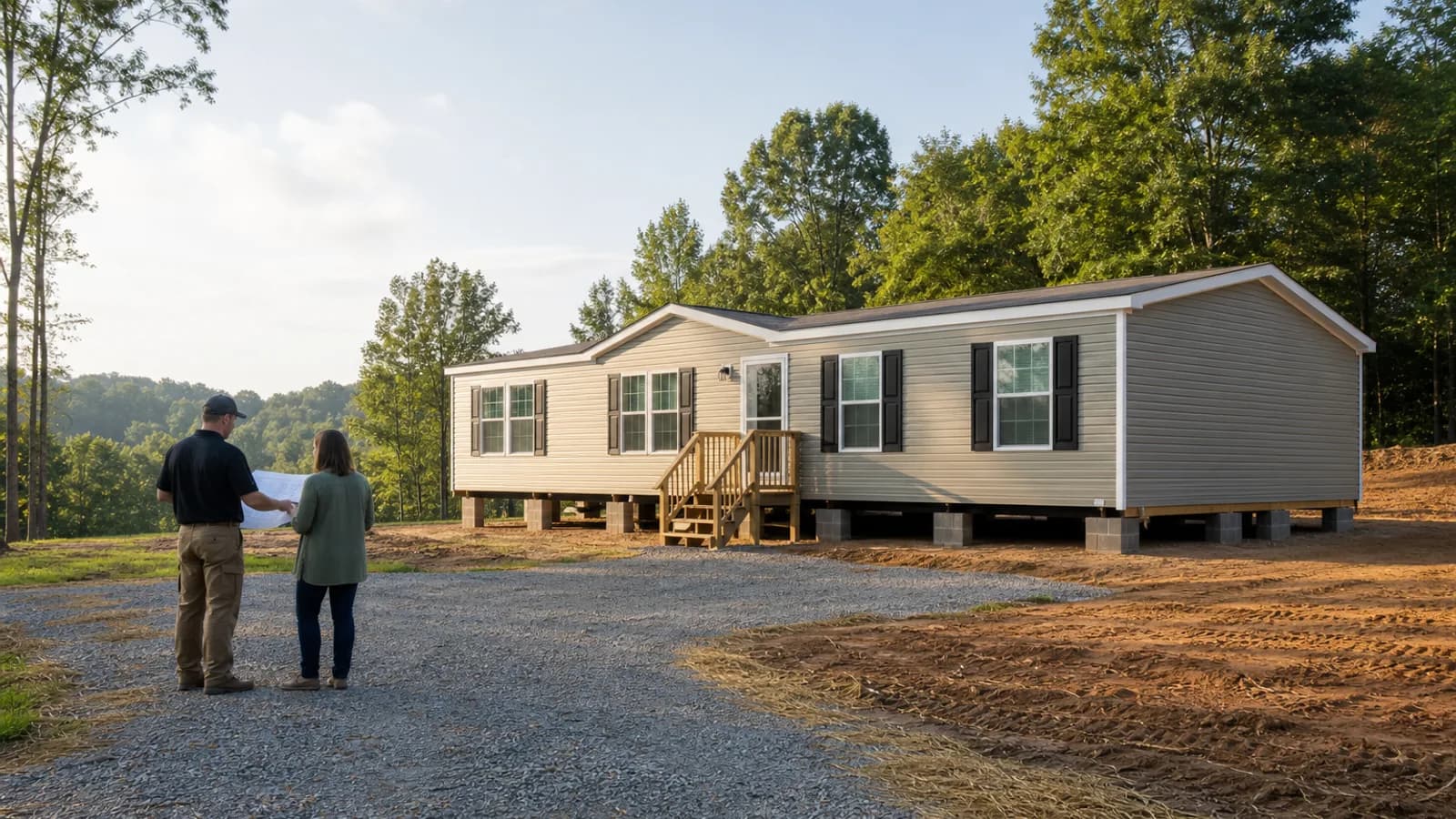
Driveway and Delivery Access
A driveway for a mobile home project must support ordinary property access and the delivery plan. Existing entrances, turns, grades, drainage, culverts, private roads, and overhead obstacles can affect readiness — the same work a manufactured home needs, because it is the same home.
Short answer: Before hiring driveway help, ask the transporter or setup team what access must be reviewed, then separate driveway construction or repair from broader grading, drainage, site prep, road, utility, and legal-access questions.
Reviewed by a manufactured home setup contractor and dealer.
Buying land for a mobile home? The Land Check reads the county's own permit rules for the one parcel you give us, and says where each answer came from and when.
$125. Asking takes no payment and places no order.
Start with the exact property, quote, record, or job detail behind your question. Mark what is confirmed, what still needs a current source, and who must answer it. Use the checklist to keep the next call, document, or decision clear.
Driveway approach, width, turns, grade, surface, soft areas, overhead obstacles, and staging space may affect delivery review.
Grading, drainage, culverts, private roads, utilities, and site prep can overlap but may involve different approvals or providers.
The guide does not design driveways, interpret easements, guarantee access, or promise contractor availability.
Step 1
Share the county or city, road type, existing driveway, slope, drainage, culvert, utility, and delivery concerns.
Step 2
Ask the transporter or setup provider what route and site information they need before a delivery decision.
Step 3
Use the intake to separate driveway, grading, drainage, culvert, site-prep, utility, road-authority, and legal-access questions.
Details to Sort
Access should be reviewed before a delivery date is treated as firm. The road approach, entrance, surface, grade, turns, staging area, trees, overhead lines, and ground conditions may all matter.
Homeowners can document the route and visible constraints, but the transporter or qualified provider should evaluate the actual home sections, equipment, turns, clearances, and delivery approach.
Driveway work may overlap with grading, drainage, erosion, ditch, or culvert questions. County, state-road, private-road, utility, and property conditions can change who must review the scope.
Private-road use, easements, shared access, buried utilities, and overhead lines are questions to verify with the appropriate records, owners, utilities, and professionals. This guide does not interpret legal access.
Some companies handle both driveway and grading work; others specialize. Describe whether the need is entrance work, base or surface, culvert, drainage, clearing, rough grading, delivery repair, or broader site prep.
Secondary Support
Use the project router first, then share details for review if you still need help organizing the project context. This does not guarantee a provider match or availability.
No. A contractor can address a defined scope, but the transporter or setup provider must evaluate the delivery plan, and local or road requirements may also apply.
Not always. Driveway, grading, drainage, culvert, clearing, and delivery repairs may be separate from transporting and setting the home. Confirm written scope.
No. Availability varies by county, city, trade, schedule, and project scope. We can help you understand which contractor category may be needed and route the request with better project details.
It depends on the work. Some licensed trades can help with standard electrical, plumbing, HVAC, decks, or grading work, while setup, transport, skirting, tie-down, and inspection-related items may need manufactured-home-specific experience.
We can help you organize the early questions around zoning, access, utilities, septic, well, grading, delivery, and setup so you know what to verify before spending more money.
No. Many people reach out before buying land so they can understand what to check before they commit to a parcel.
Many people use the terms interchangeably. Manufactured home is the modern professional term, but mobile home is still common in search, county records, and everyday conversations.