
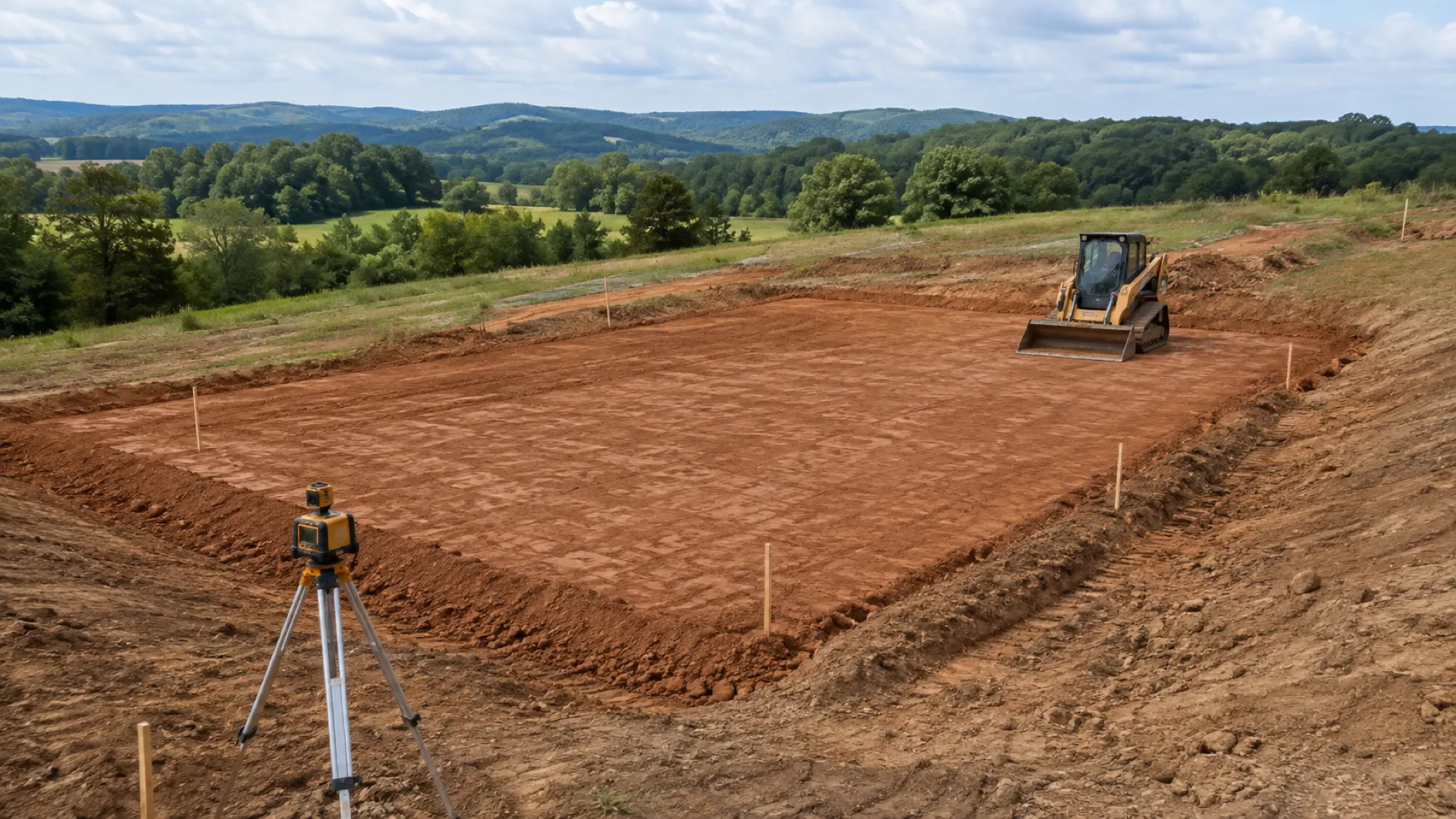
Grading / Site Prep
Mobile home site prep and grading help
Tell me about your project. The quote is free.
I'll call you to learn about your project, then give you one price in writing for the work.
Prefer to talk?Call now8 AM–8 PM
Tell me the site work you need — I'll call you, then quote it. The quote is free.
Grading and site prep for a mobile home
- We prepare the land for the home: clearing, grading the pad, drainage away from where the home will sit, and the driveway the transport needs to reach it.
- The site work comes first, so the footers, the transport and the setup can follow on a firm, level, dry pad.
- Bought land and not sure what it needs? Tell us where it is, and we quote the site work.
Or hire us for the whole installation — permits, site work, footers, transport and setup, well and septic, power, plumbing, HVAC, skirting, steps and the final inspection — with one contract and one person from the quote to the keys.
Grading and Site Preparation by county
Grading and Site Preparation
What this work is
Grading shapes the ground the home will sit on and the route the transporter drives in on: clearing, cutting and filling to a level, firm pad, a drive that holds a loaded truck, and a slope that carries water away from the home.
In North Carolina
- Where the drive meets a state-maintained road, the entrance needs a driveway permit from the NCDOT district office before the culvert or apron goes in.
- Disturbing more than one acre generally needs an approved erosion and sedimentation control plan under the North Carolina Sedimentation Pollution Control Act; some counties and towns set a lower threshold.
- The septic drainfield and repair area on the county environmental health permit have to stay untouched: no grading, driving, parking or stockpiling on them.
- The federal installation standards the state builds on require the site to drain so water does not collect under the home.
What goes wrong
- The transporter cannot get the home in on transport day: soft ground, a tight turn, low limbs or a steep grade stop the truck.
- Fill under the pad was not compacted, so it settles and the piers settle with it.
- The ground slopes toward the home and water stands under it, which brings moisture and floor problems later.
- The drainfield gets driven over or graded, and the septic permit is lost.
What to ask
- Will you walk the route a transporter needs: width, turns, slope and overhead clearance?
- How is fill placed and compacted under the pad?
- Where does the water go, and does the ground fall away from the home on every side?
- Who gets the driveway permit and any erosion control approval this site needs?
- Which areas will you keep off: drainfield, repair area, well?
Where this fits in the build
This work is grading and site prep.
Before this
trees
Common Questions
Grading and Site Preparation for a mobile home, answered.
Do I need site prep before a mobile home is delivered?
Usually. If access, slope, drainage, driveway, pad area, or clearing is not ready, the home cannot be delivered and set safely.
Is grading the same as setup?
No. Grading prepares the site and the access. Setup places and secures the home. The two contractors have to coordinate.
Should I call a regular contractor or a manufactured-home contractor?
It depends on the work. Some general trades can help with standard electrical, plumbing, HVAC, decks, or grading work, while setup, transport, skirting, tie-down, and inspection-related items may need manufactured-home-specific experience.
What to look for
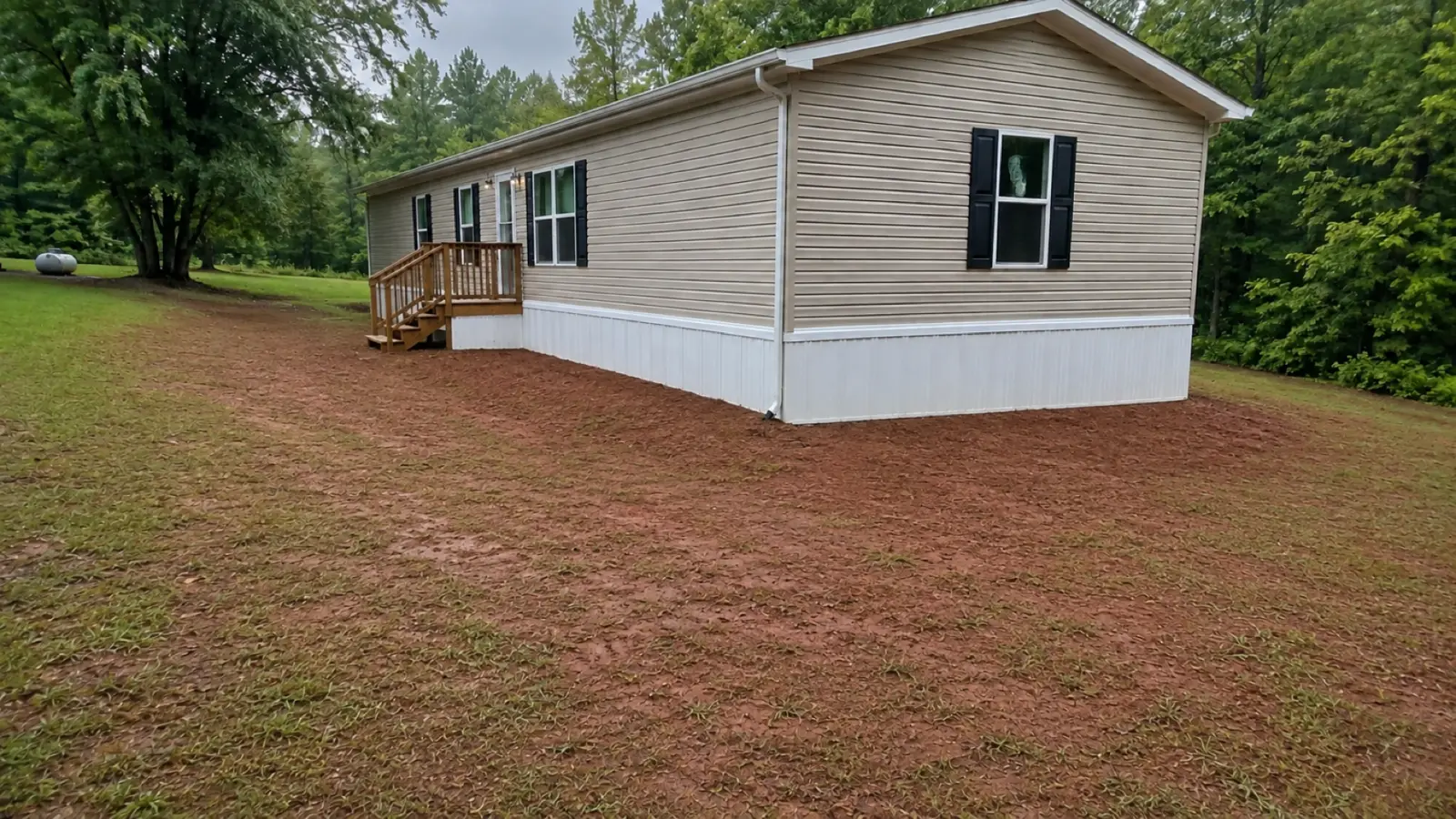
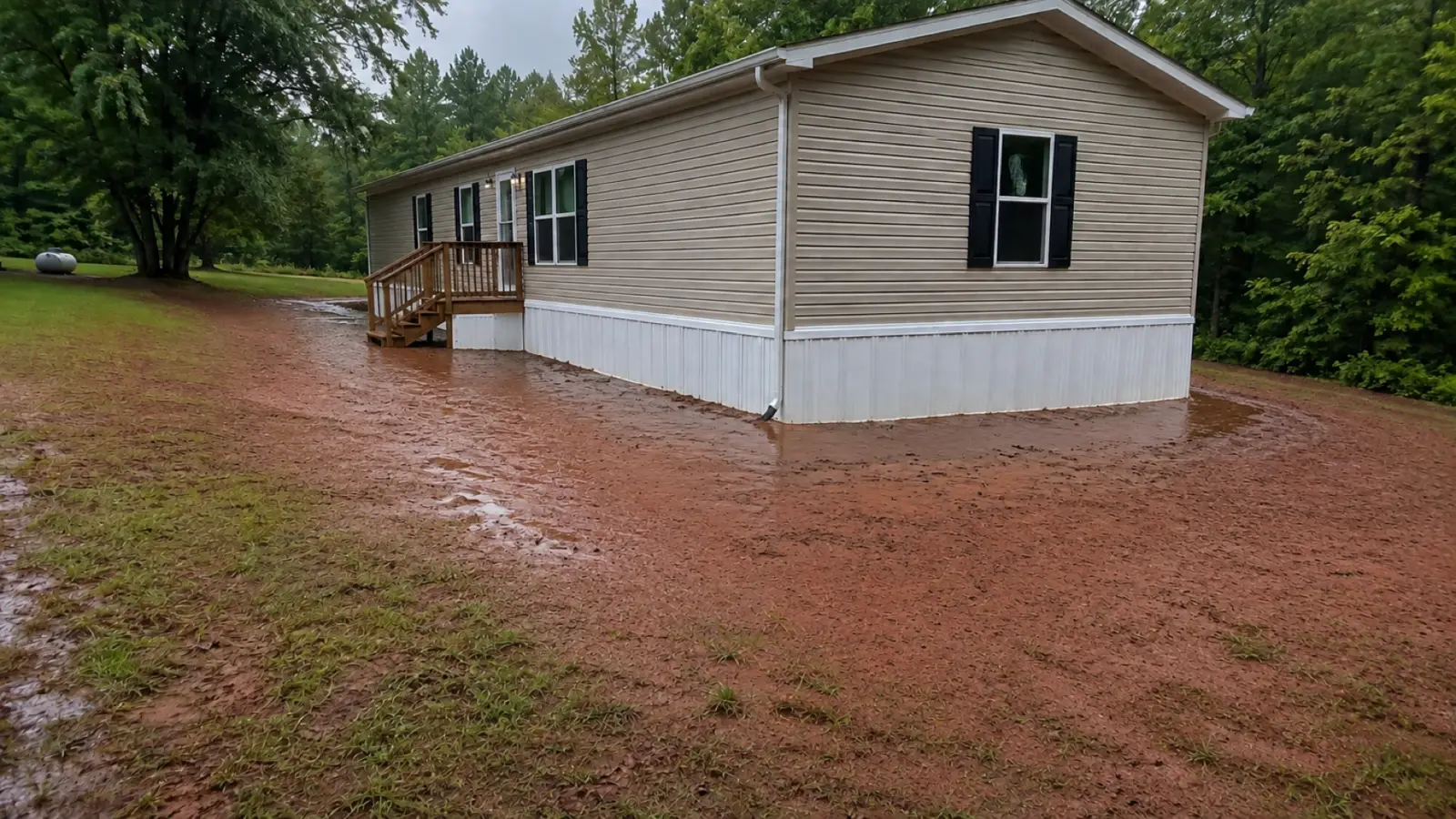
Two photographs, and the difference between them
Grading: where the water goes
The same home, the same red clay. The difference is whether the ground was shaped to fall away from the home before it was seeded.
Common site needs
Choose the closest kind of site work.
One provider may handle several items or only one. Confirm the exact scope before assuming demolition, drainage, driveway, or foundation work is included.
Rough or finish grading
Shape the site before work or finish drainage after setup.
Ask for this on the free request form →Clear or prepare the home site
Open the planned home, access, or work area.
Ask for this on the free request form →Drainage and water management
Address slope, runoff, swales, or erosion concerns.
Ask for this on the free request form →Pad or foundation-area prep
Prepare the approved home and support area.
Ask for this on the free request form →Driveway, access, or excavation
Prepare an entrance, route, culvert, trench, or dig area.
Ask for this on the free request form →Home Demolition / Removal
Remove an old mobile home or trailer when this sub-service is confirmed.
Ask for this on the free request form →Before private review
What a provider will usually need to know
You do not need every answer before asking for help. Share what you know so the scope is easier to understand.
Property address, parcel, county, or ZIP
Photos of the home area, slope, drainage, and access
Known septic, well, utility, and boundary locations
The exact work you want priced or reviewed
Timing and scope
Site work should follow a usable plan.
Home location, septic or sewer, well or water, driveway approach, drainage, utilities, permit conditions, and transport access can all change the grading scope. Avoid clearing or moving soil before the project facts are clear enough to protect the rest of the plan.
When this help may fit
- The homesite, driveway, pad, drainage, culvert, or footer area needs physical preparation.
- The transport route or equipment access requires planned clearing, stabilization, or earthwork.
- Inspection corrections, drainage issues, settlement, or finish grading remain after installation.
Questions to ask before work begins
- Which exact sub-services do you self-perform, and which work is excluded or subcontracted?
- What plan, elevations, permit conditions, soil information, or site markings will you price from?
- Does the quote define materials, quantities, compaction, drainage, erosion control, haul-off, and restoration?
- How will you protect septic areas, wells, utilities, property lines, trees, and approved foundation locations?
Documents and details to gather
- Approved or proposed site plan with home, foundation, septic, well, driveway, and utility locations.
- Survey, elevations, drainage concerns, soil information, permit notes, and erosion-control requirements.
- Transport dimensions, turning and staging needs, equipment access, and overhead-clearance limits.
- A line-item scope separating clearing, excavation, pad, driveway, drainage, footer, and finish work.
What may affect cost or timing
- Project stage, location, access, timing, materials, and provider scope.
- Whether the work is new, corrective, repair, finish, or post-install service work.
- Permit, inspection, utility, lender, insurance, warranty, or local requirements.
- How much coordination is needed with adjacent provider categories.
Keep the project connected
Helpful next steps
Ready to describe the project?
Start with the need and project ZIP.
Common Questions
Short answers for a mobile home project.
What can a mobile home site-preparation contractor help with?
The homesite, driveway, pad, drainage, culvert, or footer area needs physical preparation. The transport route or equipment access requires planned clearing, stabilization, or earthwork.
What affects the cost when I need a mobile home site-preparation contractor?
Home location, septic or sewer, well or water, driveway approach, drainage, utilities, permit conditions, and transport access can all change the grading scope.
When in my project should I contact a mobile home site-preparation contractor?
Avoid clearing or moving soil before the project facts are clear enough to protect the rest of the plan.
What My Manufactured Home Guide Does
My Manufactured Home Guide helps homeowners understand the manufactured-home project path, organize questions, and identify provider types that may be involved.
Provide this service in North Carolina? Work With Us