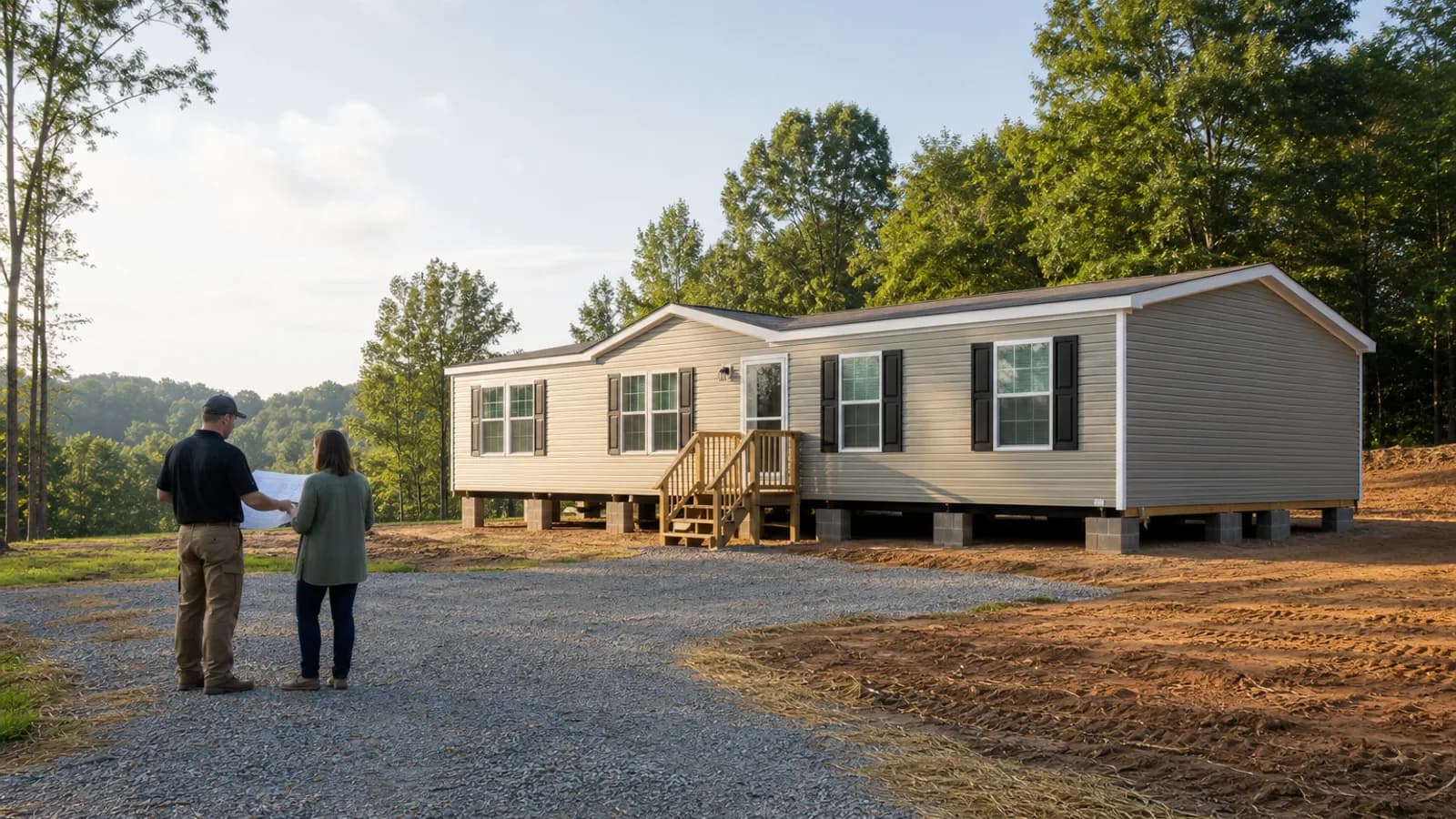
The plain-English answer
A manufactured home can often go on North Carolina land, but only if the land clears several checks. The biggest questions are whether local rules allow the home, whether the property can support septic or sewer and water, whether a driveway and delivery route are realistic, and whether site prep or utility work will make the project much more expensive than expected.
Zoning and local approval
Start with the county or city planning and zoning office. Ask whether manufactured homes, mobile homes, double wides, moved homes, or replacement homes are allowed on the parcel and whether there are home age, size, foundation, appearance, or district-specific rules.
Septic, well, and water
Land that allows a manufactured home can still fail if septic or sewer and water are not workable. Environmental health, a perc test, existing septic capacity, repair area, well location, or public utility availability can change the project path.
Driveway, access, and delivery
A home has to reach the site. Check road frontage, driveway location, culverts, turn radius, bridges, gates, trees, overhead lines, steep roads, soft ground, and whether a double wide can be delivered and joined safely.
Power, utilities, grading, and slope
Power distance, utility easements, grading, drainage, foundation work, retaining needs, and slope can move a parcel from affordable to expensive. These issues should be reviewed before assuming the home price is the project price.
Restrictions, HOA, and subdivision language
Unrestricted listing language is not enough by itself. Check deed restrictions, covenants, subdivision rules, HOA documents, recorded plats, and any private road or shared access agreement before relying on a listing description.
Before buying land or ordering a home
Before closing on land or ordering a manufactured home, confirm the county, city, environmental health, driveway/access, utility, restriction, setback, financing, and delivery basics. The earlier you check, the less likely you are to discover a blocker after money is already committed.
Build the parcel decision packet
Keep the parcel identifier and jurisdiction, proposed home type and dimensions, written zoning response, deed and plat questions, wastewater and water records, legal and physical access evidence, likely electric provider response, site-plan or survey inputs, delivery route concerns, permit prerequisites, and unresolved costs in one dated packet. Label each item confirmed, conditional, conflicting, or unknown so a missing record is visible instead of being mistaken for approval.
Match the search phrase to the right owner
Use this page for the broad own-land or backyard placement decision. Use the family-land page when another person's ownership, a shared parcel, lease, subdivision, easement, or family agreement changes the project. Use the unrestricted-land page to test a seller's listing claim. Use the zoning-permit page for the responsible jurisdiction, district, allowed-use, placement, and public-standard record. Keeping those roles separate prevents one favorable answer from being stretched into a parcel-wide conclusion.
Make the next private scope provider-ready
Before requesting clearing, grading, driveway, septic, well, electrical, foundation, or setup help, assemble the exact parcel and homesite, proposed home dimensions, authority and utility responses, best current site plan or sketch, access and delivery notes, known wastewater and water records, requested work, responsibilities, allowances, exclusions, schedule assumptions, and unresolved dependencies. Providers can then respond to a defined scope without being presented as the source of a zoning, title, design, permit, or feasibility determination. A request does not promise provider availability or response.