
Why quotes differ
Quotes can differ because of home size, manufacturer, options, dealer scope, transport distance, setup assumptions, foundation requirements, site conditions, financing path, and what is excluded.
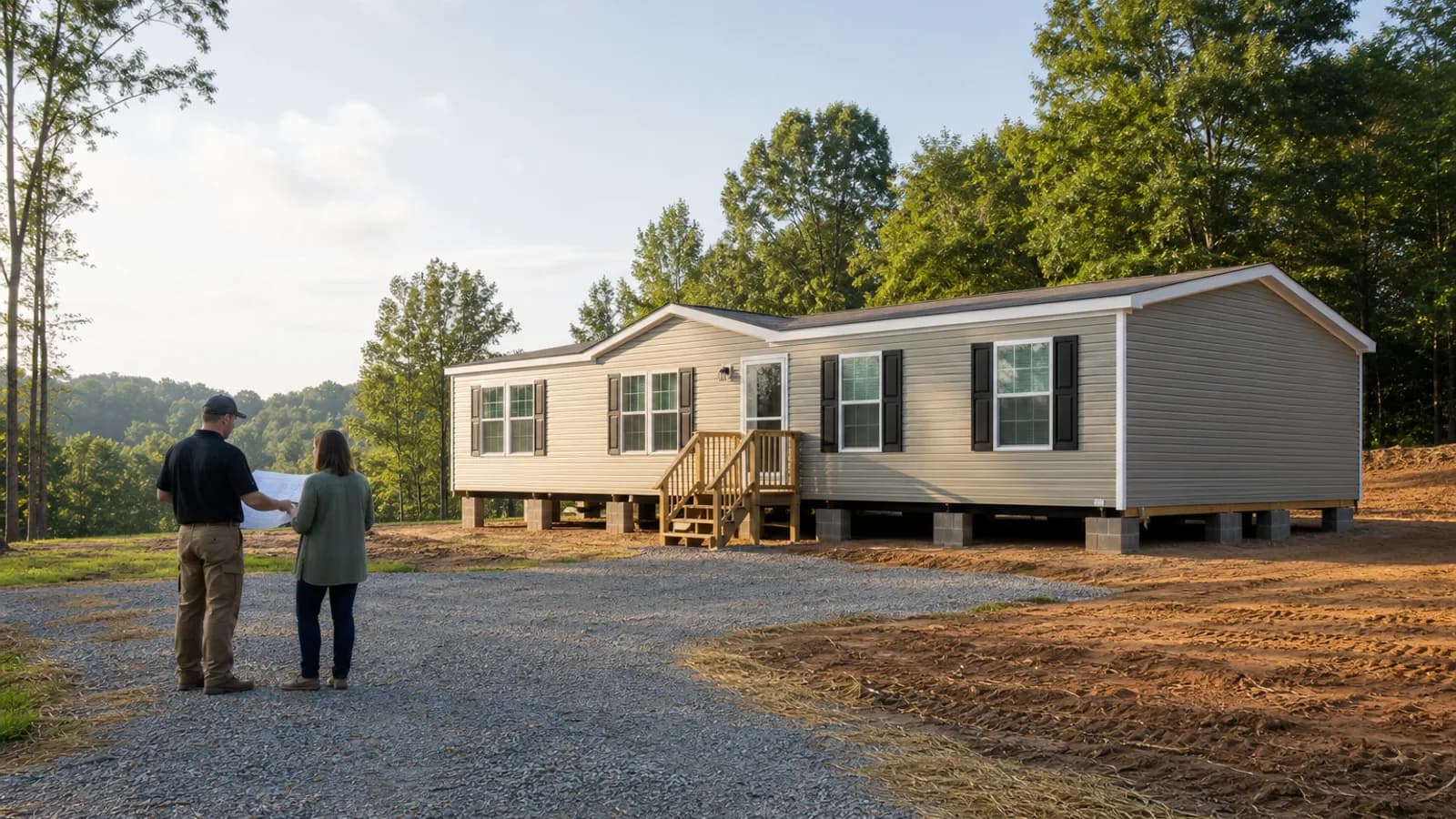
Quote Comparison
Two manufactured home quotes can look similar and still describe very different projects. The comparison has to go beyond the home price.
Short answer: Compare manufactured-home quotes row by row before comparing totals. For every home, delivery, site, setup, utility, foundation, exterior, permit, inspection, correction, and closeout item, record the exact scope and specification; quantity or limit; included, allowance, excluded, owner-supplied, conditional, or unresolved status; contracting and performing parties; prerequisite; selection deadline; price or allowance basis; written change rule; and completion evidence. Reconcile every later selection, invoice, credit, revision, and approved change to the current dated row. This matrix organizes questions and documents; it does not interpret an agreement or decide what is owed.
Reviewed by a manufactured home setup contractor and dealer.
Buying land for a mobile home? The Land Check reads the county's own permit rules for the one parcel you give us, and says where each answer came from and when.
$125. Asking takes no payment and places no order.
Start with the exact property, quote, record, or job detail behind your question. Mark what is confirmed, what still needs a current source, and who must answer it. Use the checklist to keep the next call, document, or decision clear.
One quote may include setup items that another quote leaves to the homeowner.
Different home sizes, options, foundation paths, and delivery assumptions can change the true comparison.
A quote comparison should include the property-specific work needed before occupancy.
Step 1
Put each quote into the same categories: home, options, delivery, setup, site prep, utilities, permits, inspections, financing, and finish items.
Step 2
Flag vague terms such as allowance, site work by others, standard setup, estimated, or not included.
Step 3
Compare remaining unknowns before choosing the quote that appears cheapest.
Details to Sort
Quotes can differ because of home size, manufacturer, options, dealer scope, transport distance, setup assumptions, foundation requirements, site conditions, financing path, and what is excluded.
Ask each dealer to identify what they handle, what a contractor handles, what the homeowner handles, and what still needs local office or utility confirmation.
Single-wide and double-wide quotes can differ in delivery, marriage line work, foundation support, trim-out, utility crossover, site access, and inspection needs.
A quote that ignores land readiness can be misleading. Septic, well, power, driveway, grading, permits, and inspections may decide which quote is realistic.
Ask whether financing includes only the home, home plus land, or site-work categories. Lender requirements can change what must be complete before closing or occupancy.
Ask which line contains coordination, overhead, subcontracted work, delivery, tax, permit, contingency, or another named component. Then check whether the same work appears in another dealer, installer, trade, site, utility, or homeowner scope. A difference is a clarification question, not proof of improper pricing or savings.
Check the exact quote version, expiration, home and site, included documents, conditions, deposits, milestones, approvals for changes, receipts, inspection records, punch-list ownership, warranties, manuals, releases, and other completion records. Use qualified legal advice for the actual agreement.
For each bid, keep the current quote, attachments, home specifications, site assumptions, allowances, exclusions, responsibility list, payment schedule, change terms, warranty information, and closeout requirements together. Mark the current version and preserve prior revisions so a lower total is not compared against a different project definition.
Match the actual task, location, quantity, material, included labor, equipment, coordination, permit, tax, freight, performer, schedule stage, correction responsibility, and completion record across dealer, installer, site, utility, trade, and homeowner scopes. Repeated terminology alone does not prove duplicate work or an improper charge.
Ask which party provides inspection and correction records, manufacturer and installer information, manuals, written warranties, provider contacts, approved changes, releases when applicable, and the final unresolved-item list. The matrix organizes evidence but does not approve an agreement or decide liability.
Identify the current version of each bid and include its attachments, home specifications, site assumptions, allowances, exclusions, responsibilities, milestone terms, changes, warranty information, and promised closeout records. Review My Quote can organize mismatched or unresolved scope; it does not rank providers, declare a winner, approve a contract, or guarantee a lower cost.
For each material category, capture: work and location; specification; quantity or limit; status; contracting party; performing or supplying party; prerequisite; price, unit, or allowance basis; selection deadline; change trigger and authorization path; inspection, correction, or warranty contact when relevant; and completion evidence. A blank cell is an unresolved question, not proof that another party owns the work.
Keep the starting allowance, included assumptions, selection deadline, selected item and specification, supported actual amount, delivery and labor treatment, overage or credit method, approval, invoice or provider record, and revised quote row together. Do not treat an allowance label or invoice alone as contract interpretation, payment direction, or proof of completion.
A useful packet identifies the current agreement and affected row, reason and evidence, replacement scope, amount or calculation method, allowance or credit effect, responsible and performing parties, dependencies, schedule and inspection effects, owner-supplied consequences, approval record, and every revised attachment. Preserve superseded versions for comparison.
Review My Quote
Organize line-item responsibilities, allowances, selections, owner-supplied items, exclusions, versions, and change questions without contract interpretation or payment direction.
Secondary Support
Use the project router first, then share details for review if you still need help organizing the project context. This does not guarantee a provider match or availability.
Similar words do not prove duplicate billing. One line may cover materials, another labor, another coordination, and another a different location or project stage.
Next step: Compare the exact task, location, quantity, material, performer, contracting party, prerequisite, milestone, and completion evidence; request a written explanation before treating it as duplicate scope.
The amounts may be tied to different deposits, orders, delivery stages, field milestones, inspections, corrections, retainage, or closeout records.
Next step: Normalize the stated trigger, amount or basis, evidence, exceptions, remaining work, and responsible party for each milestone. Use qualified advice for the actual payment decision.
The original allowance, chosen specification, supported actual amount, overage or credit, affected labor or delivery, schedule effect, and current quote version may all need reconciliation.
Next step: Keep the original allowance row, selection record, supporting invoice or provider document, written overage or credit calculation, approval, and revised responsibility matrix together without deciding the legal payment result.
A verbal request can leave the changed scope, reason, amount method, responsible party, prerequisite, schedule effect, inspection path, warranty contact, and replaced document unclear.
Next step: Pause the document comparison and ask for a dated written change packet that identifies the affected row and current attachments. Use qualified advice for authorization or payment decisions.
That label does not identify who selects, confirms compatibility, purchases, receives, stores, protects, installs, connects, permits, inspects, corrects, or handles warranty questions.
Next step: Route the item to the dealer-quote owner, name every handoff in writing, and carry any price or schedule effect back into the comparison matrix.
Not without checking scope. A lower quote may exclude site prep, utilities, permits, setup details, decks, skirting, or inspection corrections.
Compare home size and options, then compare delivery, setup, foundation, utility, site access, inspection, and finish requirements for each home type.
We can help organize the questions and likely missing categories, but homeowners should confirm final scope with the dealer, lender, county offices, utilities, and qualified professionals.
We can help you organize the early questions around zoning, access, utilities, septic, well, grading, delivery, and setup so you know what to verify before spending more money.
No. Many people reach out before buying land so they can understand what to check before they commit to a parcel.
Many people use the terms interchangeably. Manufactured home is the modern professional term, but mobile home is still common in search, county records, and everyday conversations.
Each link was checked on the date shown. The office that issued it decides your parcel, not this page.
North Carolina state source · checked 2026-08-31
Official North Carolina consumer guidance on putting promises, included items, specifications, options, and dates in the written contract and keeping document copies. It does not interpret an individual agreement.
Federal source · checked 2026-08-31
Official manufactured-home homeowner guidance on purchasing, installation roles, separately listed installation services, warranties, and records. State requirements and actual written scopes still control their own questions.