
What setup, set, and install can mean
Some people use setup to mean delivery and placement. Others include foundation, tie-downs, utilities, permits, decks, skirting, and final inspection items. Ask each provider exactly what their wording includes.
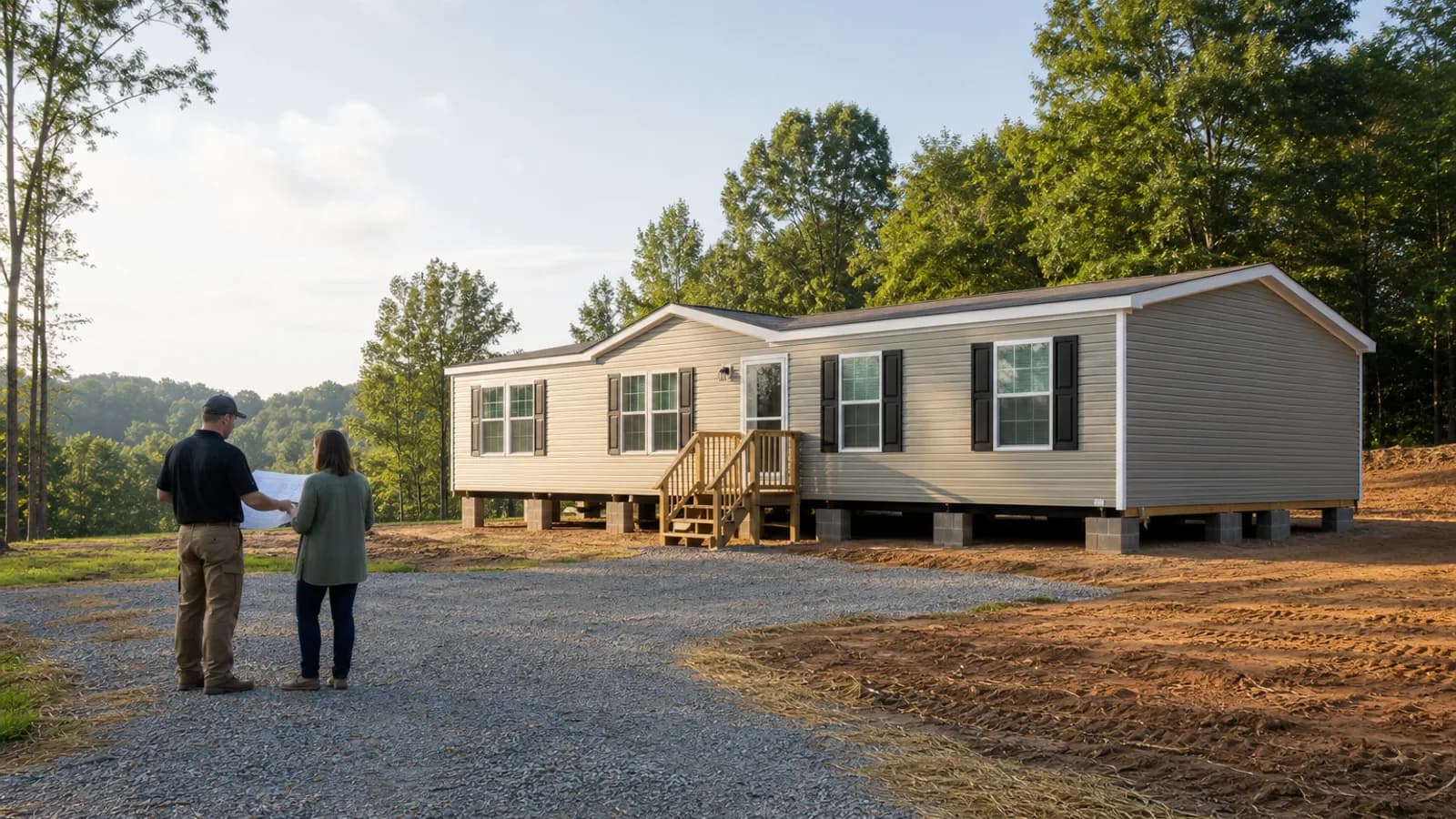
Setup and Install Cost
Mobile home setup cost can mean transport only, setting and anchoring the home, or a much larger installed scope. In North Carolina, the useful answer starts by separating every written responsibility instead of relying on one setup total.
Short answer: There is no reliable statewide flat price for setting up a mobile or manufactured home in North Carolina. A written setup quote should identify the exact home and section count; delivery route and access assumptions; placement; foundation support, piers, blocking, anchoring, footings or masonry; marriage-line and crossover work; weather closure and trim; utility and licensed-trade connections; steps, decks, skirting, grading and cleanup; permits, inspections, corrections, warranties, exclusions, allowances, work by others, and closeout records. The manufacturer instructions, current North Carolina installation rules, the local authority, utilities, and licensed trades control the technical requirements. Compare the same written rows rather than one unexplained setup number.
Reviewed by a manufactured home setup contractor and dealer.
Buying land for a mobile home? The Land Check reads the county's own permit rules for the one parcel you give us, and says where each answer came from and when.
$125. Asking takes no payment and places no order.
Start with the exact property, quote, record, or job detail behind your question. Mark what is confirmed, what still needs a current source, and who must answer it. Use the checklist to keep the next call, document, or decision clear.
Set up, set, and install can mean different combinations of delivery, home placement, foundation, utilities, inspections, and finish work.
Single-wide and double-wide setup costs can differ because double-wide homes involve two sections and marriage line work.
Dealer quotes and site-work quotes may cover different scopes, so exclusions should be reviewed before scheduling delivery.
Step 1
Clarify whether the quote includes delivery, setup, foundation, utility connections, permits, inspections, steps, skirting, and trim-out.
Step 2
Identify site conditions that can increase cost, such as slope, soft soil, long driveway, limited access, trees, power distance, septic, or well needs.
Step 3
Collect property details and quote exclusions before comparing setup, set, or install numbers.
Details to Sort
Some people use setup to mean delivery and placement. Others include foundation, tie-downs, utilities, permits, decks, skirting, and final inspection items. Ask each provider exactly what their wording includes.
Costs vary by home size, number of sections, delivery route, access, slope, soil, foundation approach, utility distance, inspection requirements, contractor scope, and county workflow.
A single-wide is one section, while a double-wide is delivered in two sections and joined on site. Double-wide setup may involve marriage line, trim-out, alignment, and additional utility coordination.
Setup can involve piers, blocks, anchors, tie-downs, pads, permanent foundation considerations, or other approved support methods depending on the home and project.
Delivery can be affected by distance, road access, turns, bridges, trees, overhead lines, escorts, crane needs, weather, and whether the site can receive the home safely.
Utility connections, HVAC coordination, plumbing, electrical work, steps, decks, landings, skirting, and inspection corrections may or may not be included in a setup quote.
Local permits and inspections can affect timing and cost. Site conditions such as slope, drainage, grading, driveway access, septic, well, and power should be checked before relying on a simple setup number.
A dealer quote may include some setup items but exclude site prep, utility extensions, septic, well, driveway, decks, skirting, or inspection corrections. Ask what is included and what must be quoted separately.
Create separate rows for carrier and route work, site access, placement, installation, foundation support, anchoring, close-up, crossovers, utilities, exteriors, permits, inspections, corrections, cleanup, and final documents. Record the responsible party, included quantity, assumption, exclusion, allowance, prerequisite, and completion evidence for each row.
For each line, record the home and section count, quantity or route assumption, included labor and materials, performer, contracting party, prerequisite, allowance, exclusion, by-others work, milestone, inspection dependency, correction owner, warranty contact, and closeout evidence. Review My Quote can organize the written scope and open questions, but it does not create a price, declare a charge fair, or guarantee savings.
For each delivery and setup milestone, identify the scope that must be complete, the inspection or provider record that proves it, unresolved punch-list treatment, correction responsibility, protection and cleanup expectation, warranty or service handoff, and documents delivered before payment. This does not decide contract rights or authorize withholding; it gives the homeowner a consistent question set for the written agreement and qualified advice.
The manufacturer installation instructions, current North Carolina Office of State Fire Marshal rules and licensing information, the local permit and inspection office, the serving utilities, and appropriately licensed trades control the project-specific requirements. This guide helps organize a quote; it does not design the installation, determine code compliance, approve a provider, or promise an inspection, utility release, price, or completion result.
Review My Quote
Submit the current written proposal to organize setup inclusions, exclusions, allowances, responsibilities, and questions. My Manufactured Home Guide does not set prices, approve technical work, or guarantee project cost or completion.
Secondary Support
Use the project router first, then share details for review if you still need help organizing the project context. This does not guarantee a provider match or availability.
That phrase does not establish route, access work, staging, special equipment, foundation support, anchoring, multi-section close-up, crossovers, utilities, trim, exterior access, skirting, inspections, corrections, return trips, warranty, or closeout.
Next step: Require a row for every scope with the provider, quantity or assumption, included material and labor, prerequisite, completion evidence, exclusion, allowance, correction duty, change rule, and payment milestone.
It depends on the home, property, county, access, utility distance, foundation approach, inspection requirements, and what is included in the quote. Separate setup work from site prep and utility work before comparing numbers.
People often use those phrases for the same general question, but each quote may define install, set, or setup differently. Confirm the scope in writing.
Slope, poor access, long driveway, tight turns, soft ground, drainage, utility distance, trees, overhead lines, septic or well uncertainty, and inspection corrections can all affect cost.
We can help you organize the early questions around zoning, access, utilities, septic, well, grading, delivery, and setup so you know what to verify before spending more money.
No. Many people reach out before buying land so they can understand what to check before they commit to a parcel.
Many people use the terms interchangeably. Manufactured home is the modern professional term, but mobile home is still common in search, county records, and everyday conversations.