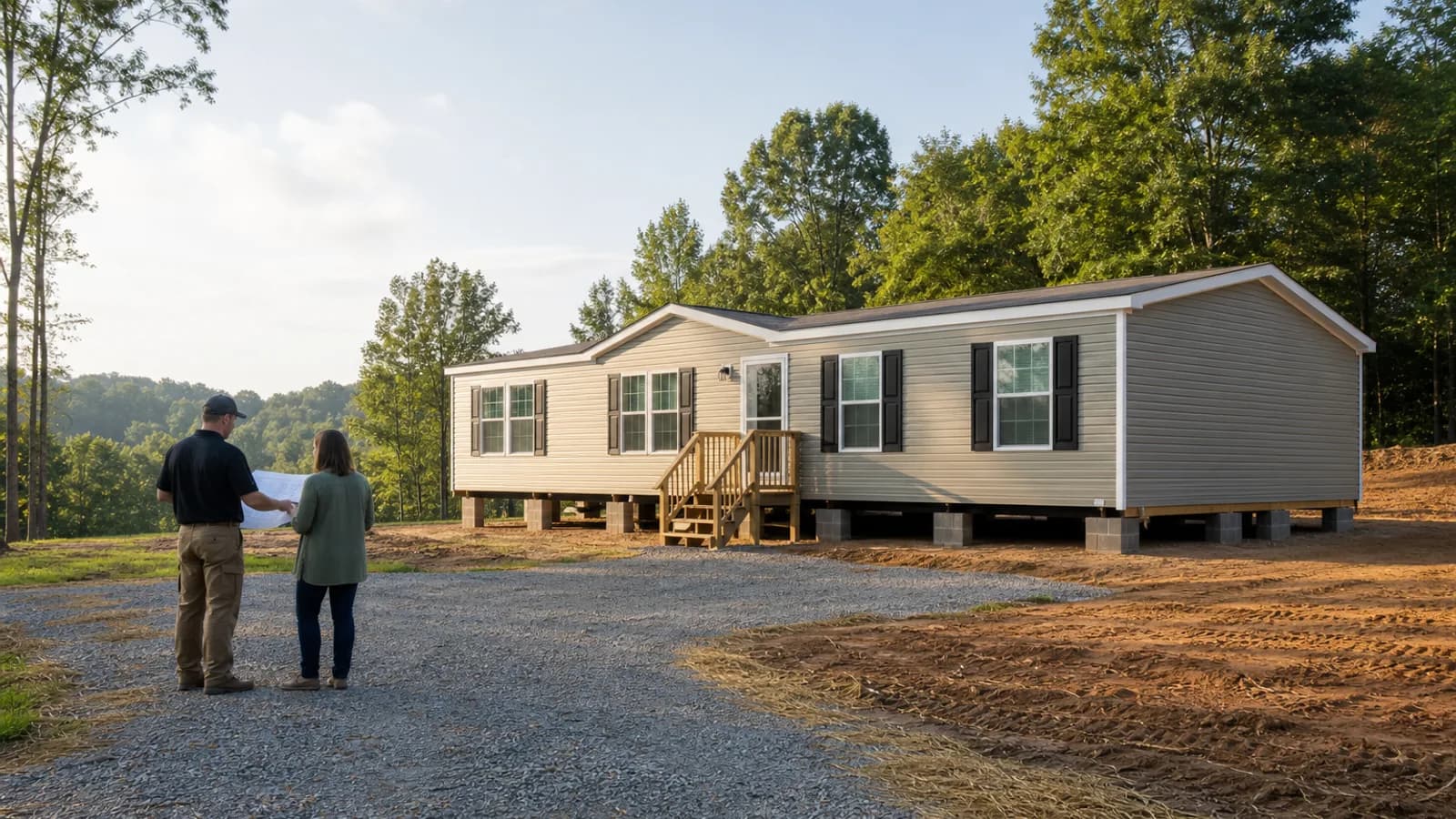
Home price versus full project cost
The home, factory options, delivery, setup, land, utilities, approvals, and finish work are different cost layers. A headline home price should not be treated as the complete installed project unless the written scope clearly accounts for every relevant category.
Land, permits, access, and utilities
Land purchase, surveys or plans, zoning and permits, septic or sewer, well or water, power, driveway, culvert, clearing, grading, drainage, and trenching can vary by property, county, utility, provider, and project design.
Delivery, foundation, and setup
Transport, escorts, route or access work, foundation or support, blocking, anchoring, multi-section joining, trim-out, crane or special equipment, inspection readiness, and corrections may be included, excluded, or split among providers.
Trades and exterior completion
Electrical, plumbing, HVAC, utility connections, startup, steps, decks, landings, skirting, gutters, drainage repair, driveway repair, cleanup, and landscaping may remain after the home is placed. Confirm written responsibility and timing.
Allowances, financing, and post-install unknowns
Allowances can change when actual site conditions or provider scopes are known. Financing treatment also varies. The guide does not replace financial, attorney, or other professional guidance, accuse dealers or providers, audit quotes, or guarantee total project cost, approval, funding, or outcome.
Find missing utility and site-work scope by responsibility
For clearing, grading, drainage, access, foundation preparation, septic or sewer, water or well, power, trenching, customer-side trades, temporary service, inspections, corrections, and restoration, ask which document includes the work, who performs and contracts it, what quantity or route is assumed, what evidence closes it, and where an unresolved allowance belongs in the budget.
Use an unknown-condition decision record
Record the location and date; who observed the condition; photos, reports, test results, or authority notice available; work affected; immediate protection or pause instruction from the responsible source; who evaluates it; included exclusion, allowance, or unit language; proposed response; amount method; schedule and inspection effect; required authorization; and the document that closes the question. This is evidence organization, not technical or legal direction.
Separate discovery from an authorized change
A provider may identify rock, unsuitable soil, water, access, utility conflicts, damage, added quantity, or another condition. The current documents and responsible sources must still establish the work response, contracting party, price basis, approvals, inspection path, restoration, and revised completion evidence. Do not merge the discovery photo, estimate, invoice, and approved change into one assumed decision.