
Permit and inspection ledger
Create one list of every building, setup, trade, septic, well, access, zoning, utility, and final record with its current status.
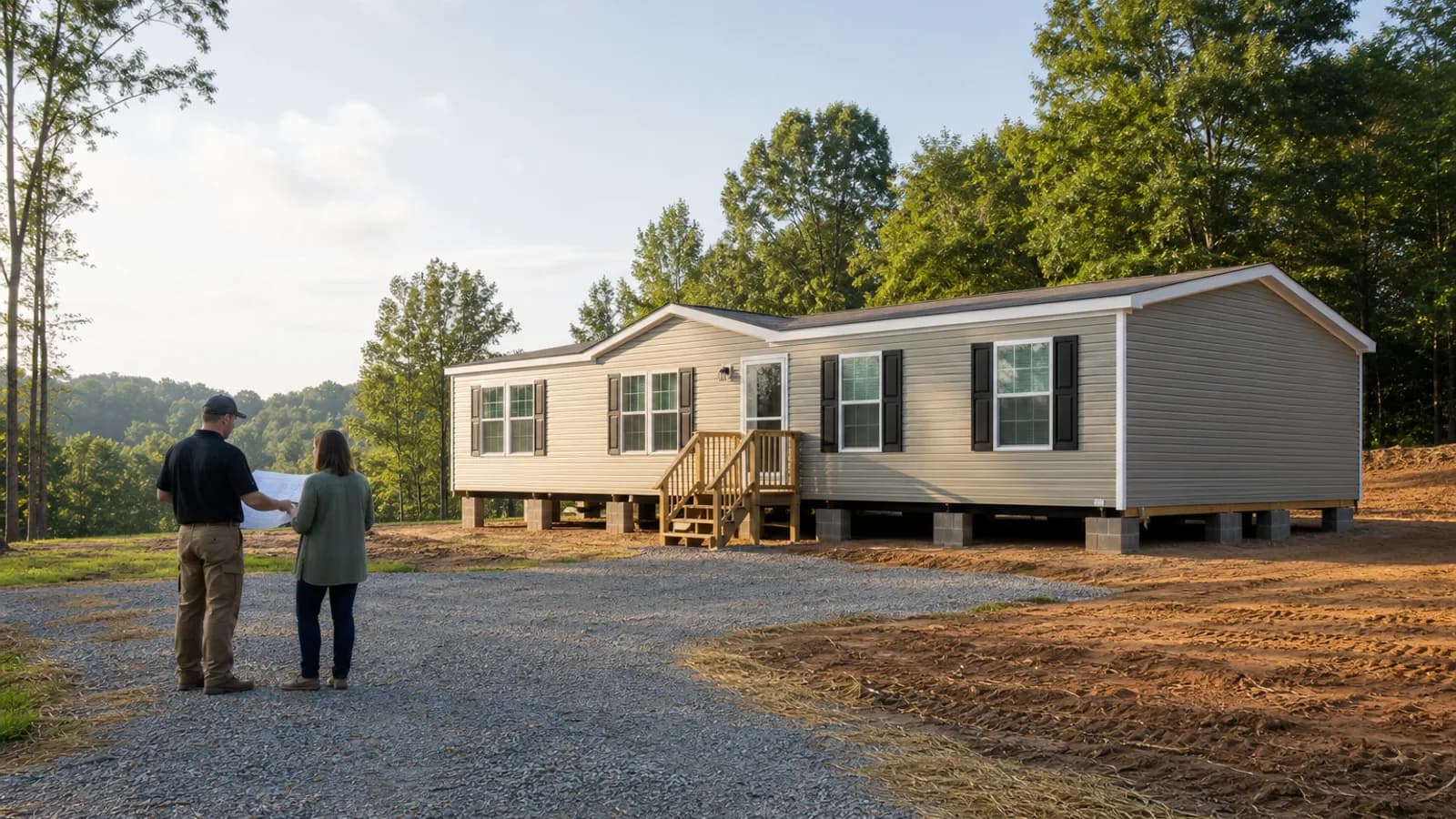
Final Inspection And Closeout
Delivery and setup do not necessarily mean a manufactured home is ready for lawful occupancy. Local closeout can involve installation, trade, access, utility, wastewater, correction, and final-inspection steps.
Short answer: Treat final inspection, utility release, utility energization, and occupancy evidence as separate records until the responsible local office says otherwise for the project. North Carolina law connects completion under a building permit to final inspection and a certificate of compliance, and it provides a limited temporary-occupancy path under stated conditions; a trade pass, power release, working meter, provider completion note, or verbal move-in statement is not a substitute for the actual certificate or occupancy record. Ask the inspection department which record applies, whether it has been issued, what conditions remain, and how the homeowner can obtain a copy before moving in.
Reviewed by a manufactured home setup contractor and dealer.
Buying land for a mobile home? The Land Check reads the county's own permit rules for the one parcel you give us, and says where each answer came from and when.
$125. Asking takes no payment and places no order.
Start with the exact property, quote, record, or job detail behind your question. Mark what is confirmed, what still needs a current source, and who must answer it. Use the checklist to keep the next call, document, or decision clear.
List every permit, inspection, correction, approval, utility release, and document that remains open.
Separate setup work from electrical, plumbing, mechanical, septic, well, access, deck or stair, skirting, and final items.
Confirm the county or city terminology and do not treat a passed trade inspection as overall occupancy approval.
Step 1
Ask the permit office for the current status of every project permit and inspection.
Step 2
Assign each open correction or document to the dealer, setup contractor, trade, homeowner, utility, or other responsible party.
Step 3
Obtain the actual local closeout or occupancy evidence before moving in or relying on project completion.
Details to Sort
Create one list of every building, setup, trade, septic, well, access, zoning, utility, and final record with its current status.
Confirm foundation, anchoring, marriage line, utility connections, HVAC, electrical, plumbing, gas, access structures, skirting, and weatherproofing as locally applicable.
A correction should name the affected permit or inspection, the work required, the responsible party, and the reinspection path.
Ask the local authority what it calls the final occupancy or closeout record and how the homeowner can verify that it was issued.
Keep separate rows for each setup and trade final, zoning or land-use signoff when applicable, wastewater or water record, local utility-release communication, actual utility energization, overall final inspection, certificate or occupancy record, and unresolved correction. Ask the responsible office which rows apply to the project and which one authorizes occupancy.
Keep separate rows for: the applicable trade and setup finals; the local utility-release communication; the utility's service or energization record; and the inspection department's certificate of compliance, certificate of occupancy, temporary certificate, or other locally named occupancy record. Add unresolved corrections, agency holds, wastewater or water records, access items, and zoning or land-use signoffs when the responsible offices say they apply. One checked row does not prove the others.
Request copies of the current permit list, inspection and reinspection results, closed correction notices, utility-release and service records, wastewater and water closeout records when applicable, final certificate or occupancy record, setup and trade completion evidence, approved documents the homeowner must retain, provider contacts, warranties, manuals, and unresolved-item list. Store private account, identity, signature, access, lender, and utility information securely and share only what a responsible recipient needs.
The inspection department owns its permit, result, and certificate records; the utility owns its service record; permit holders and qualified providers own their retained work and completion evidence; wastewater, water, zoning, or other agencies own their decisions; contract parties own the private handoffs assigned in writing; and the homeowner keeps the final package. A project coordinator may track all of them without having authority to issue or change any one record.
Project Consulting
Use Project Consulting when multiple permit, inspection, utility, provider, and document owners need one responsibility map. It does not issue a release or certificate or confirm occupancy.
Secondary Support
Tell us the work and your ZIP and we send you to the right contractor category page, where you send the request. No account needed.
Setup completion may not close electrical, plumbing, HVAC, gas, wastewater, water, or utility work.
Next step: Ask the permit office which trade permits and inspections remain and identify the responsible provider for each item.
The project may remain open until the responsible work is corrected, re-inspected, and documented.
Next step: Get the written correction list, responsible scope, reinspection process, and any sequence dependencies.
A verbal statement is not the same as the local occupancy or final record.
Next step: Ask the authority having jurisdiction which official record confirms the current occupancy status.
Utility service can be an important closeout checkpoint without proving that zoning, setup, trades, wastewater, access, corrections, final inspection, or occupancy authorization is complete.
Next step: Ask the local authority which permits remain open and which specific official record—not the meter status—confirms occupancy.
A passed result may still need to be recorded, connected to other trade finals, cleared of agency holds or corrections, and followed by the inspection department's certificate process.
Next step: Ask the issuing office which permit passed, which permits or holds remain, whether a certificate has been issued, and how to retrieve the official record. Do not create a certificate from a screenshot or contractor statement.
Release and energization address a service process. They do not by themselves establish that every permit, correction, wastewater, access, zoning, final, or occupancy requirement is complete.
Next step: Keep the release and utility record, then obtain the separate inspection-department answer for the final and certificate status.
North Carolina law allows a temporary certificate only under stated conditions and for a stated period; it is not a homeowner-created workaround for incomplete closeout.
Next step: Ask the responsible inspection department whether that path is available for this project, what conditions and limits it would state, and what work and records must still close.
Not necessarily. Local permits, trade work, utilities, inspections, corrections, and occupancy procedures may still be open.
No. Statewide installation guidance applies, but counties and local authorities can use different offices, forms, inspection sequences, and closeout records.
No. Only the responsible public authority can issue or confirm the local occupancy or final record.
Each link was checked on the date shown. The office that issued it decides your parcel, not this page.
North Carolina state source · checked 2026-08-31
Statewide manufactured-home installation guidance; local authorities administer their own permit and inspection processes.
North Carolina state source · checked 2026-08-31
Official state manufactured-homes program landing source, not a substitute for local closeout instructions.
County source · checked 2026-08-31
Official county example showing local manufactured-home permits, inspections, trade, access, septic, grading, and final-item coordination.
County source · checked 2026-08-31
Official county example separating zoning compliance inspection from building closeout and connecting local zoning completion to certificate-of-occupancy and permanent-power readiness.
County source · checked 2026-08-31
Official local process document for permit records, wastewater evidence, inspection scheduling, corrections, and reinspection questions; it does not create one statewide closeout order.
North Carolina state source · checked 2026-08-31
Current statewide source connecting final inspection to a certificate of compliance and addressing temporary occupancy. The local inspection department identifies the actual project record and status.