
Before concrete or concealment
Ask whether footings, trenches, piping, wiring, supports, anchors, blocking, marriage-line connections, and under-home work must be inspected while visible. Do not use general guidance as permission to cover work.
Inspection Readiness
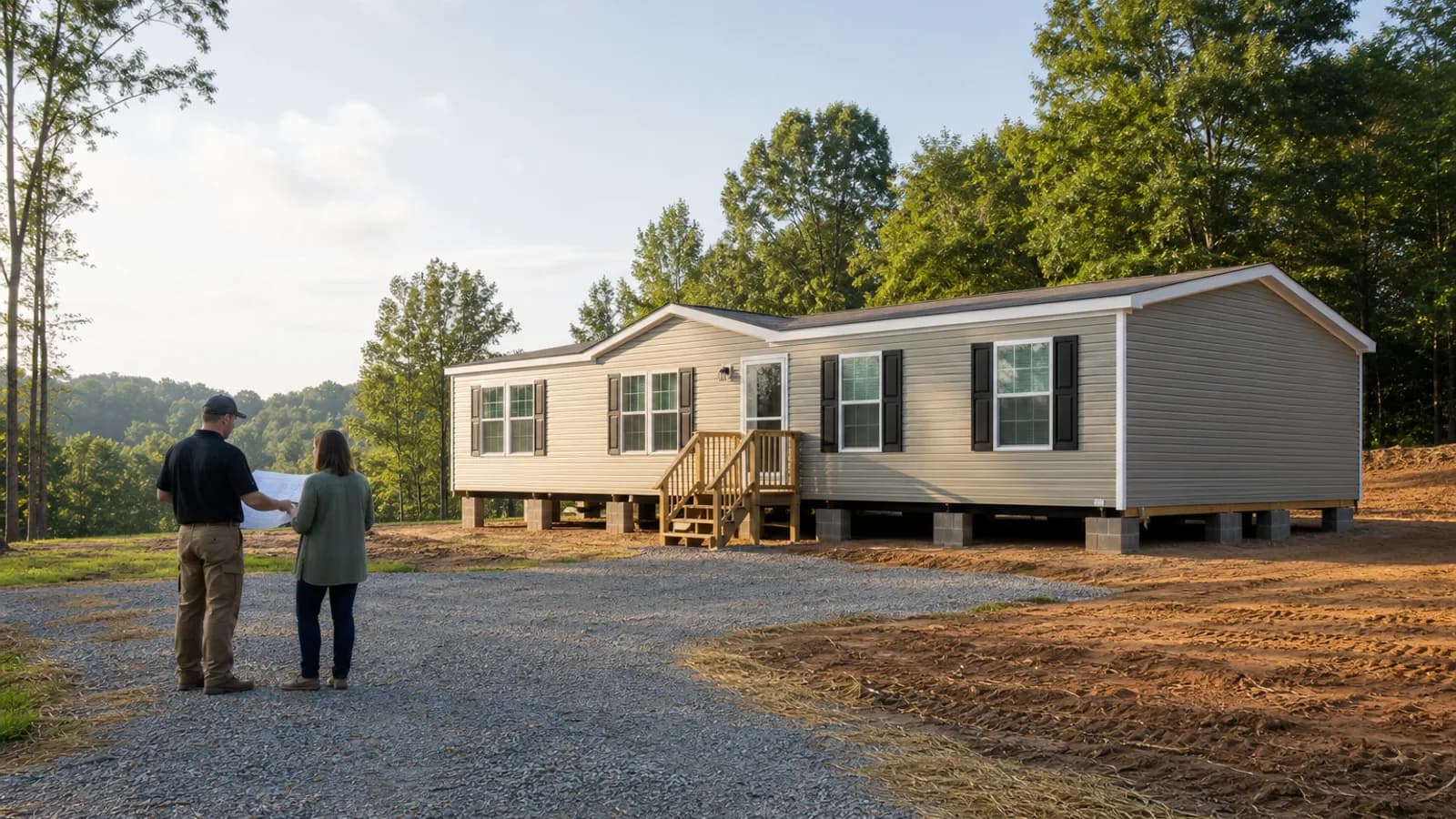
Manufactured-home inspections are staged so work can be seen before concrete, skirting, backfill, or finish work hides it. The exact inspection names and order must be confirmed locally.
Short answer: Build the inspection sequence from the project's permit record and the responsible local office. For every footing, setup, under-home, trade, access, correction, and final checkpoint, record what must remain visible, who requests it, the permit and inspection type, the official result, and what that result actually unlocks. A passed electrical or other trade inspection may allow the local authority to send or record a service-release authorization under its process, but it is not the utility's energization record and is not the building's occupancy record. Ask the permit office and utility to name the sender, recipient, account or permit identifiers, remaining prerequisites, and final evidence for this property.
Reviewed by a manufactured home setup contractor and dealer.
Buying land for a mobile home? The Land Check reads the county's own permit rules for the one parcel you give us, and says where each answer came from and when.
$125. Asking takes no payment and places no order.
Start with the exact property, quote, record, or job detail behind your question. Mark what is confirmed, what still needs a current source, and who must answer it. Use the checklist to keep the next call, document, or decision clear.
Footings may need inspection before concrete is poured.
Under-home, marriage-line, plumbing, electrical, HVAC, anchoring, blocking, and other work may need to remain exposed.
Final approval can depend on completed trade work, steps or landings, skirting, grading, address, documents, and local utility-release rules.
Step 1
Get the official local inspection list and the current NC Installation Manual or manufacturer instructions before setup begins.
Step 2
Assign each inspection call to the responsible setup or trade provider and record what must remain exposed and what documents must be present.
Step 3
Track passed, failed, and correction results before covering work, installing skirting, requesting service release, or assuming occupancy is allowed.
Details to Sort
Ask whether footings, trenches, piping, wiring, supports, anchors, blocking, marriage-line connections, and under-home work must be inspected while visible. Do not use general guidance as permission to cover work.
Official examples call for manufacturer instructions, setup information, ladders or access, an unlocked home, tests, and other documents or conditions. Get the local list before the inspector arrives.
Electrical, plumbing, HVAC, gas, water, sewer, and septic work may have separate permits and inspections. Ask which approvals must exist before permanent power, water, or final approval.
Track who requested the inspection, which permit and scope passed, who closes corrections, who communicates any service release, what the utility accepts, when energization occurs, and which final or occupancy record remains. The names and order vary by authority and utility, so do not treat one completed checkpoint as proof of the others.
The final may address completed setup, tie-downs, trades, skirting, steps or landings, handrails, grading, address, documents, and correction items. The responsible authority sets the project-specific list.
Ask the responsible local office which permit and inspection type applies, who is authorized or expected to request it, how the request is submitted, what readiness statement or documents are needed, who provides access, and who receives the result. The permit holder, setup contractor, licensed trade contractor, owner, or applicant may have different roles under the local process.
For each checkpoint, retain the permit identifier, requested inspection, requester, scheduled or completed date, official result, exact correction note, reinspection result, downstream dependency, and issuing office. For a utility release, add the local authority's release status, sender, recipient utility, property and service identifiers, sent or recorded date, utility acknowledgment, customer-account prerequisite, field-service status, and the separate final or occupancy record still required. Do not publish account numbers, private portal screenshots, signatures, or homeowner contact details.
The actual communication method is local. It may be entered in a permit system, transmitted by the inspection department, or handled through another authority-to-utility workflow after the applicable inspection result. The electrician or other permit holder may request the inspection and follow up, while the utility controls its service and energization process. Ask both organizations to identify their own step; do not rely on a provider saying that another party has the release.
Project Consulting
Use Project Consulting when permit, provider, utility, correction, and closeout records need one responsibility map. It does not schedule inspections, release service, confirm occupancy, or guarantee a result.
Secondary Support
Tell us the work and your ZIP and we send you to the right contractor category page, where you send the request. No account needed.
Official county examples require footing inspection before concrete is poured.
Next step: Confirm the local inspection request and do not pour until the responsible authority says the checkpoint is satisfied.
Marriage-line connections may be a distinct inspection checkpoint while the work remains visible.
Next step: Ask the inspector and setup provider what access, ladder, instructions, and exposed connections are required.
Some official county processes inspect under-home work before skirting or masonry conceals it.
Next step: Confirm that underside, utility, blocking, anchoring, and related inspections have passed before concealment.
A passed trade checkpoint may still need correction closeout, another final, local release communication, utility processing, or customer account work before energization.
Next step: Ask the permit office who records the passed inspection, who communicates the release, what the utility still needs, and whether overall final or occupancy steps remain separate.
A contractor update or homeowner note does not replace the inspection department's current permit record. North Carolina law requires inspection departments to retain inspections, reinspections, defects, and certificate records.
Next step: Ask the responsible local office for the current permit and inspection history, then store the retrieved result with the permit number, date, inspection type, requester, and any open correction.
The local result, release communication, utility processing, account readiness, field connection, energization, and building occupancy status can be separate events handled by different parties.
Next step: Ask the inspection office whether it sent or recorded a release, how it identifies the utility and service, and who receives it. Ask the utility what it received and which customer or field prerequisites remain. Keep both answers as separate records.
Energization does not prove that every setup, trade, wastewater, access, zoning, correction, final, or occupancy checkpoint is complete.
Next step: Return to the complete permit ledger and ask the inspection department which final or certificate record applies before treating the project as ready for occupancy.
Some county processes require under-home work to pass inspection before skirting or a curtain wall conceals it. Confirm the local checkpoint before installation.
The responsible permit holder, setup contractor, licensed trade contractor, owner, or applicant may need to request them depending on the permit and local process. Ask the local inspection office to identify the requester and method, then assign access, notice, result, and correction follow-up in writing.
No. A local inspection addresses the authority's scope at that time. Contract, warranty, utility, manufacturer, site, and other project questions may remain.
We can help you organize the early questions around zoning, access, utilities, septic, well, grading, delivery, and setup so you know what to verify before spending more money.
No. Many people reach out before buying land so they can understand what to check before they commit to a parcel.
Many people use the terms interchangeably. Manufactured home is the modern professional term, but mobile home is still common in search, county records, and everyday conversations.
Each link was checked on the date shown. The office that issued it decides your parcel, not this page.
North Carolina state source · checked 2026-08-31
Primary statewide installation source. Local permit and inspection procedures may add process steps without replacing this manual.
North Carolina state source · checked 2026-08-31
Official state manufactured-homes program and document landing page.
County source · checked 2026-08-31
Official county guide separates footing, underside, and final checkpoints and lists work inspected at each stage.
County source · checked 2026-08-31
Official county checklist provides current local plumbing, electrical, HVAC, gas, deck, floodplain, and final-inspection starting points.
County source · checked 2026-08-31
Official county process document separates application, wastewater documents, onsite records, inspection scheduling, corrections, and reinspection starting points.
North Carolina state source · checked 2026-08-31
Current statewide source for inspection-department duties, permit-holder inspection requests, notice of work that does not meet applicable code, correction orders, and records. It does not assign private contract responsibility.