
Check 1
Transport and setup condition
Document exterior and interior condition, marriage lines, level, supports, anchors, roof and siding, doors and windows, trim, flooring, and any transport or setup damage before responsibility becomes unclear.
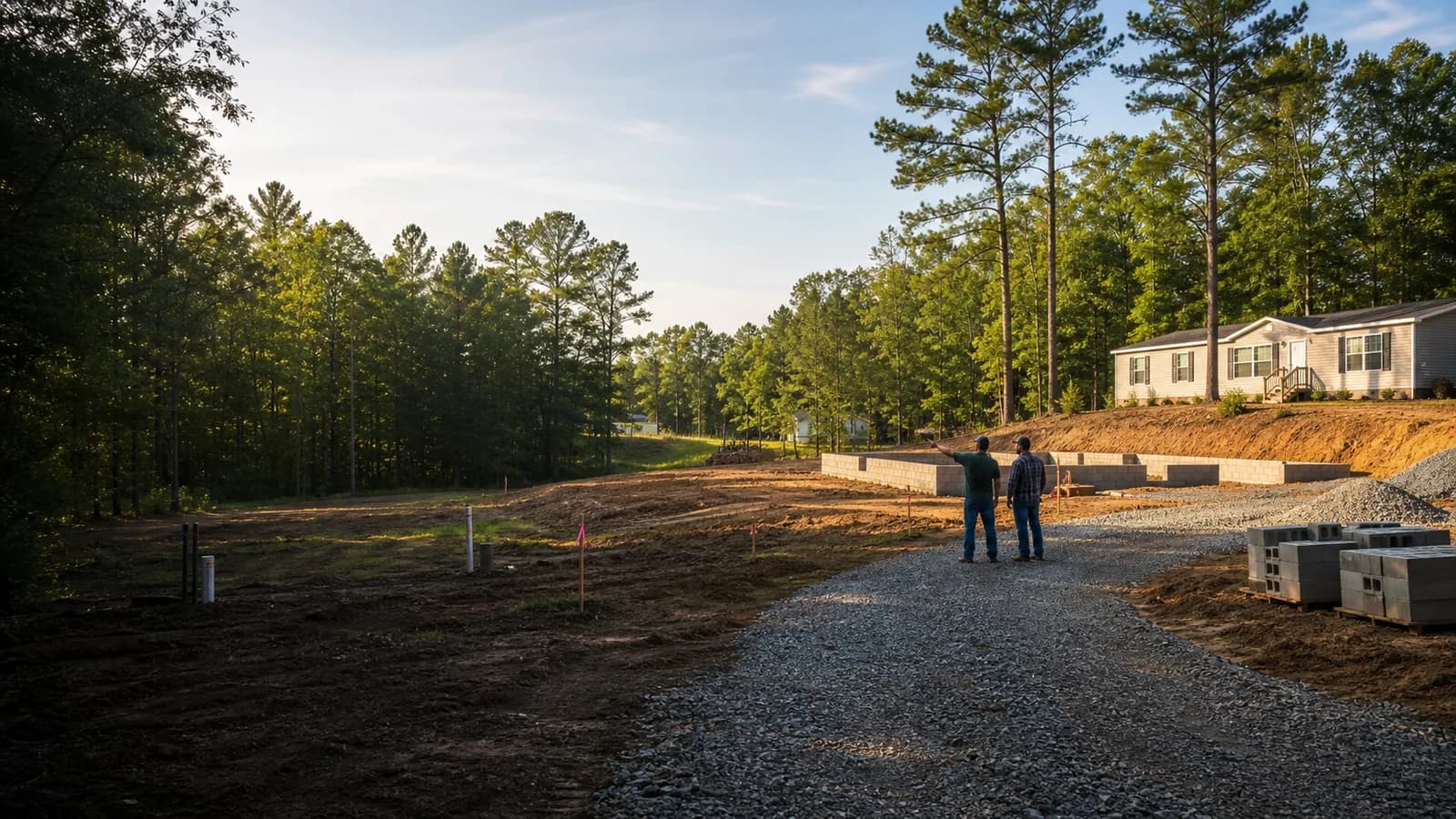
After The Home Arrives
A delivered or set home is not necessarily ready for occupancy. Setup closeout, utility connections, HVAC, gas, inspections, correction items, safe access, skirting, trim, drainage, final grade, documentation, and warranty responsibilities may still remain.
Who This Is For
Use this checklist if the home is onsite or set and you need to organize what remains before final approval, occupancy, lender closeout, warranty follow-up, or a clean handoff from the installation phase.
Project Timeline
This checklist begins immediately after delivery and setup. Complete concealed or inspection-dependent work before skirting, decks, landscaping, or finishes block access, and keep a dated punch list until every responsibility is closed or assigned.
Key Things To Verify
Mark each item confirmed, pending, unknown, or not applicable. Keep the document, name, date, or field observation that supports the answer.
This checklist is for your own planning. Selections are not submitted or saved to My Manufactured Home Guide and reset when the page is refreshed.
Check 1
Document exterior and interior condition, marriage lines, level, supports, anchors, roof and siding, doors and windows, trim, flooring, and any transport or setup damage before responsibility becomes unclear.
Check 2
Track electrical release, water and wastewater connections, plumbing tests, HVAC equipment and startup, gas or propane testing, condensate, freeze protection, utility access, and the provider responsible for each correction.
Check 3
Review the permit card or portal, open inspections, failed or conditional items, required documents, reinspection steps, final approvals, and whether occupancy is legally allowed before moving in.
Check 4
Coordinate required stairs, landings, guards, handrails, ramps, decks, crawl access, ventilation, vinyl skirting, utility penetrations, and inspection access at the home's final elevation.
Check 5
Inspect delivery and equipment damage, ruts, driveway condition, drainage around the home, foundation exposure, erosion, debris, final grade, downspout planning, and stabilization before landscaping hides a problem.
Check 6
Collect installation and inspection records, manuals, registrations, warranties, keys, serial information, photos, receipts, lien releases where applicable, provider contacts, and written ownership of every open item.
Common Missing Pieces
Closing the perimeter too early can hide supports, anchors, plumbing, electrical, HVAC, moisture, debris, or correction work that inspectors and providers still need to reach.
Each open item should identify the condition, photo or document, responsible party, promised action, access need, inspection dependency, and completion status.
Power or water service does not by itself prove that required installation, trade, building, zoning, septic, or occupancy approvals are complete.
Ruts, ponding, exposed footings, poor slope, displaced fill, damaged culverts, and runoff toward the home can affect access, moisture, foundation performance, and future repair cost.
Provider Scope
These are doctrine-backed scope categories, not provider listings or a claim that a provider is available. Confirm the exact sub-service and responsibility before hiring.
Secondary Support
Use the checklist first, then open the homeowner question library if you still need help organizing the next question. The guides do not guarantee matching or provider availability.
Common Questions
Coordinate required stairs, landings, guards, handrails, ramps, decks, crawl access, ventilation, vinyl skirting, utility penetrations, and inspection access at the home's final elevation.
Closing the perimeter too early can hide supports, anchors, plumbing, electrical, HVAC, moisture, debris, or correction work that inspectors and providers still need to reach.
This checklist is educational guidance, not a permit approval, legal opinion, engineering determination, lending decision, insurance advice, inspection result, or contractor recommendation. Current local requirements and qualified professionals control the project-specific answer.