Manufactured and Mobile Home Contractor Type
Mobile home plumbing providers
Tell me about your project. The quote is free.
I'll call you to learn about your project, then give you one price in writing for the work.
Prefer to talk?Call now8 AM–8 PM
Plumbing on a mobile home setup means connecting the home's water and drain lines under the floor to the water supply and to the septic or sewer line, joining the crossover between the halves on a double-wide, then a pressure test and the county inspection. Tell us the home and what needs connecting, and we'll quote the plumbing — free.
Last checked: October 22, 2026.
Plumbing providers may connect water and wastewater lines, complete under-home or exterior plumbing, install approved components, pressure-test systems, or correct inspection items within their licensed and contracted scope. Septic, sewer utility, well, and interior plumbing responsibilities may be separate.
Plumbing
What this work is
The plumber connects the home's water supply and drain lines to the well or public water and to the septic tank or sewer, and joins the lines between sections on a multi-section home.
In North Carolina
- The county issues the plumbing permit and inspects the connections.
- The drain from the home to the septic tank or sewer tap has to keep a steady downhill slope and be supported under the home.
- The supply riser and lines under the home need protection from freezing.
- The water heater's relief line has to discharge where the code allows, not under the home.
What goes wrong
- The drain sags between supports and holds water.
- Crossover connections between sections are left loose.
- The supply riser freezes the first cold snap.
- The septic tank inlet or sewer tap is not where the drain was planned.
What to ask
- Where is the drain stub-out on this home, and where is the tank or tap?
- How will you support and slope the drain under the home?
- How are the supply lines protected from freezing?
- Who pulls the plumbing permit?
When in the project
- The tank or tap location is fixed with the site plan, before the home arrives.
- Connections are made after the home is set and leveled, and before skirting closes the crawlspace.
- The plumbing inspection comes before the final.
Where this fits in the build
This work is plumbing tie-in.
Common question
Related Project Stages
Where this provider type may fit
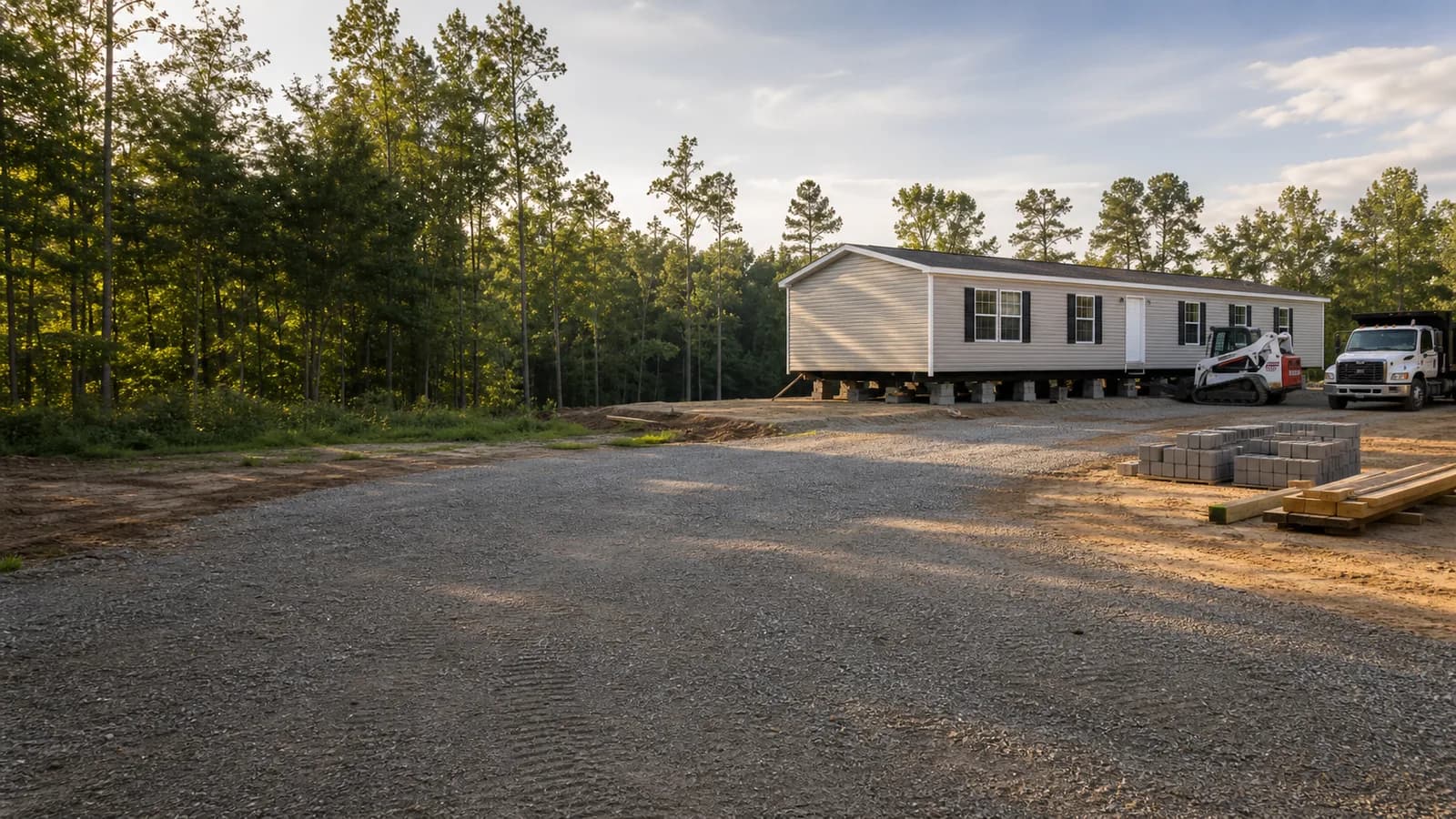
This category generally fits after the home is set and the water and wastewater paths are ready, but trenching and connection planning should happen earlier. Plumbing approval may be required before skirting or other work limits access.
Some projects may not need this provider type. Use the stage links below to understand the timing before assuming the work is needed, included, or ready to schedule.
What this provider type may help with
Water-supply and waste-line connections between the home and approved site systems.
Under-home plumbing completion, testing, protection, or corrections when included.
Coordination with septic, sewer, well, public water, setup, heat tape, insulation, and inspections.
Project stages this provider type usually relates to
These stage links are educational routing labels. They do not show provider results or assign a business to your project.
Homeowner Scope Check
When this may come up
The home is set and needs approved water or wastewater connections.
The provider responsibilities between dealer, installer, septic, well, and plumber are unclear.
Leaks, freeze protection, venting, support, testing, or inspection corrections remain open.
Questions to ask
- 1Which supply, waste, vent, testing, insulation, heat-tape, permit, and inspection tasks are included?
- 2Where does your scope begin and end relative to the home, well, public water, septic, or sewer connection?
- 3What approved plans, home specifications, distances, pipe sizes, and site access do you need?
- 4Who handles inspection scheduling, correction work, and protection before skirting closes access?
Things to gather
- 1Home plumbing specifications, setup status, dealer or installer scope, and open inspection notes.
- 2Approved septic or sewer connection information and well or public-water details.
- 3Site plan, connection distances, trench status, crawl access, elevation, and freeze-protection needs.
- 4Photos of home connection points, existing infrastructure, damage, leaks, or incomplete work.
What may affect cost or timing
Compare the full mobile home project costCommon Questions
Plumbing for a mobile home, answered.
What can a plumber for a mobile home help with?
Plumbing providers may connect water and wastewater lines, complete under-home or exterior plumbing, install approved components, pressure-test systems, or correct inspection items within their licensed and contracted scope. Septic, sewer utility, well, and interior plumbing responsibilities may be separate.
What affects the cost when I need a plumber for a mobile home?
Provider pricing and scheduling can depend on site conditions, documents, timing, access, materials, local requirements, and the exact work being requested. Ask for written scope before comparing numbers. Project stage, location, access, timing, materials, and provider scope. Whether the work is new, corrective, repair, finish, or post-install service work. Permit, inspection, utility, lender, insurance, warranty, or local requirements. How much coordination is needed with adjacent provider categories.
When in my project should I contact a plumber for a mobile home?
This category generally fits after the home is set and the water and wastewater paths are ready, but trenching and connection planning should happen earlier. Plumbing approval may be required before skirting or other work limits access.
Related homeowner checklists
Related homeowner paths
Related guides
Other provider types that may be involved
Helpful Next Step
Get help understanding what type of provider may fit.
For North Carolina Providers
Provide Plumbing services in North Carolina?
We send these jobs to contractors in the homeowner's county. We hire subcontractors and pay them directly for the work.
Next Step
Keep this provider type in context.
Use the planner, dealer quote questions, or county/code library to understand when this scope may matter.
Land question first?
Can My Land Work?
Review zoning, septic or sewer, water, access, utilities, site prep, dealer quote, and setup questions before assuming the land works.
Preparing land for transport?
Site Preparation Checklist
Organize clearing, grading, driveway access, poured footers, the setup workspace, and dealer quote questions.
Transport coming into focus?
Before Transport Checklist
Sort access, site preparation, poured footers, setup, utility connections, who does each job, and local process questions.
Utility questions unclear?
Septic, Well, and Utilities
Organize septic or sewer, well or water, electric, plumbing, HVAC, propane/gas, dealer scope, and local process questions.
Setup or final questions?
Setup and Inspection Readiness
Organize setup contractor, foundation, utilities, decks, stairs, skirting, trim-out, inspection, and dealer-scope questions.
Checking NC guidance?
NC Installation Manual
Understand how the NC Installation Manual, NC OSFM, county/local AHJs, manufacturer instructions, and the professionals who do the work fit together.
Reviewing a quote?
Dealer Quote Questions
Separate what may be included, excluded, estimated, or assigned to another party before you sign.
Checking local requirements?
County / Code Library
Use source-backed starting points for county, local AHJ, utility, septic, well, and inspection questions.
No account needed
Get a free quote
Need help with the rest of the job, not just this trade? Tell me where your project is and I'll call you.
What My Manufactured Home Guide Does
My Manufactured Home Guide helps homeowners understand the manufactured-home project path, organize questions, and identify provider types that may be involved.