
Mobile Home Installation
Mobile home power and electrical hookup in North Carolina
Tell me about your project. The quote is free.
I'll call you to learn about your project, then give you one price in writing for the work.
Prefer to talk?Call now8 AM–8 PM
Electrical providers may handle service equipment, feeders, connections, trench-related coordination, interior or exterior circuits, corrections, or inspection work within their license and contract. Utility-company work and electrician work are separate responsibilities that must be coordinated.
Electrical
What this work is
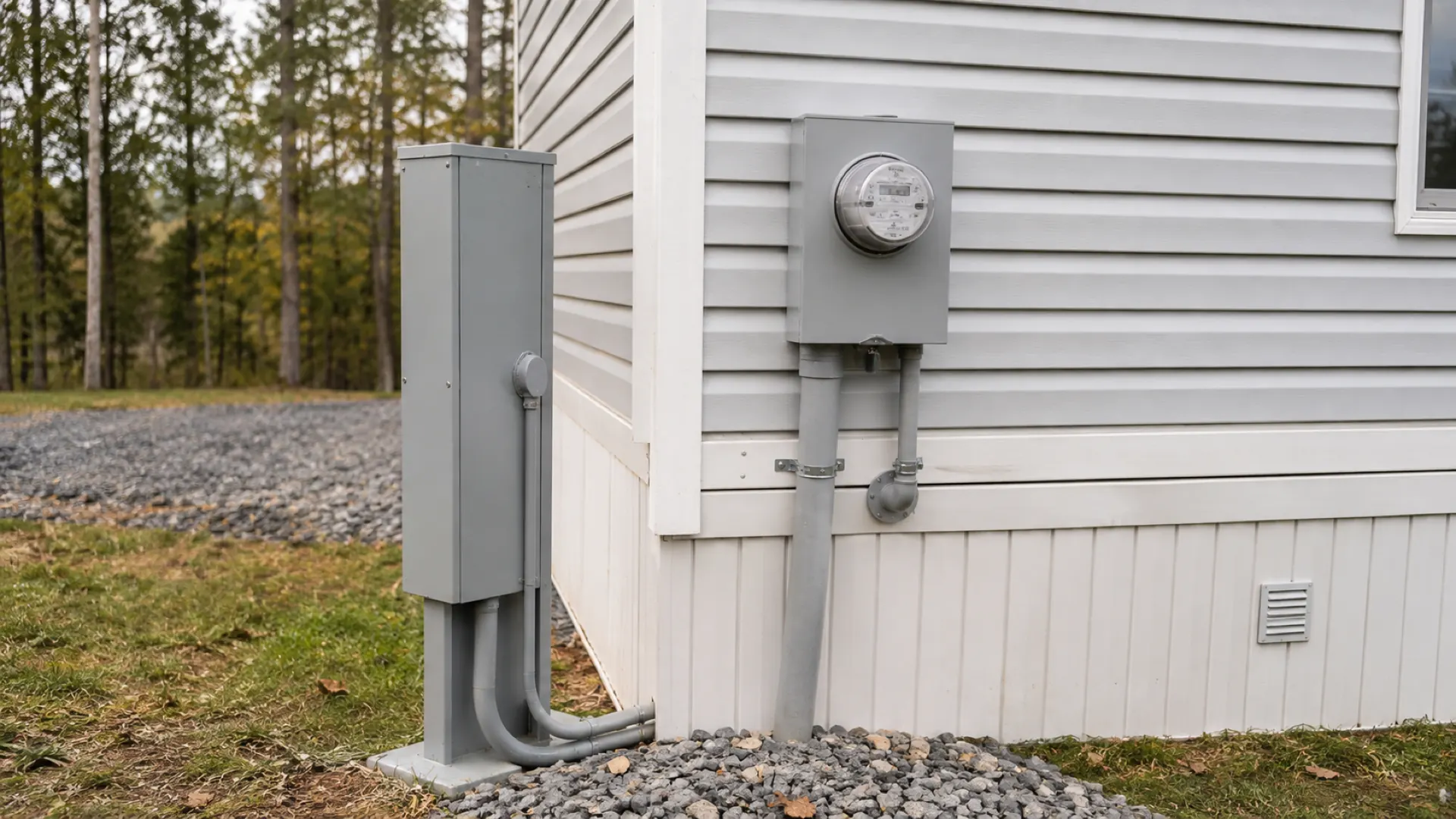
The electrician brings power from the power company's line to the home: the meter base and service equipment on a pole or pedestal, the feeder to the home's panel, and the circuits for outdoor equipment such as the heat pump.
In North Carolina
- The county issues the electrical permit and inspects the service before the power company will set the meter.
- A mobile home's service equipment usually stands on a pole or pedestal near the home, not on the home; the feeder to the home's panel keeps the neutral and the ground separate.
- Each power company sets its own rules for where the meter goes and how far it will bring the line, and its own wait time for a new service.
What goes wrong
- The meter base is set where the power company will not serve it.
- Neutral and ground are tied together at the home's panel, and the inspection fails.
- The service is too small for the heat pump, water heater and range together.
- The power company's wait pushes the power-on date past move-in.
What to ask
- Who applies to the power company, and how long is their wait here?
- Where will the meter base and disconnect stand?
- What size service, and does it cover the heat pump, water heater and range?
- Who meets the electrical inspector?
When in the project
- Apply to the power company as soon as the home site is fixed; it is often the longest wait in the project.
- Temporary power, if the crews need it, goes in before setup.
- The service and feeder go in after the home is set; the county inspects before the meter is set.
Where this fits in the build
This work is electric hookup.
What to look for
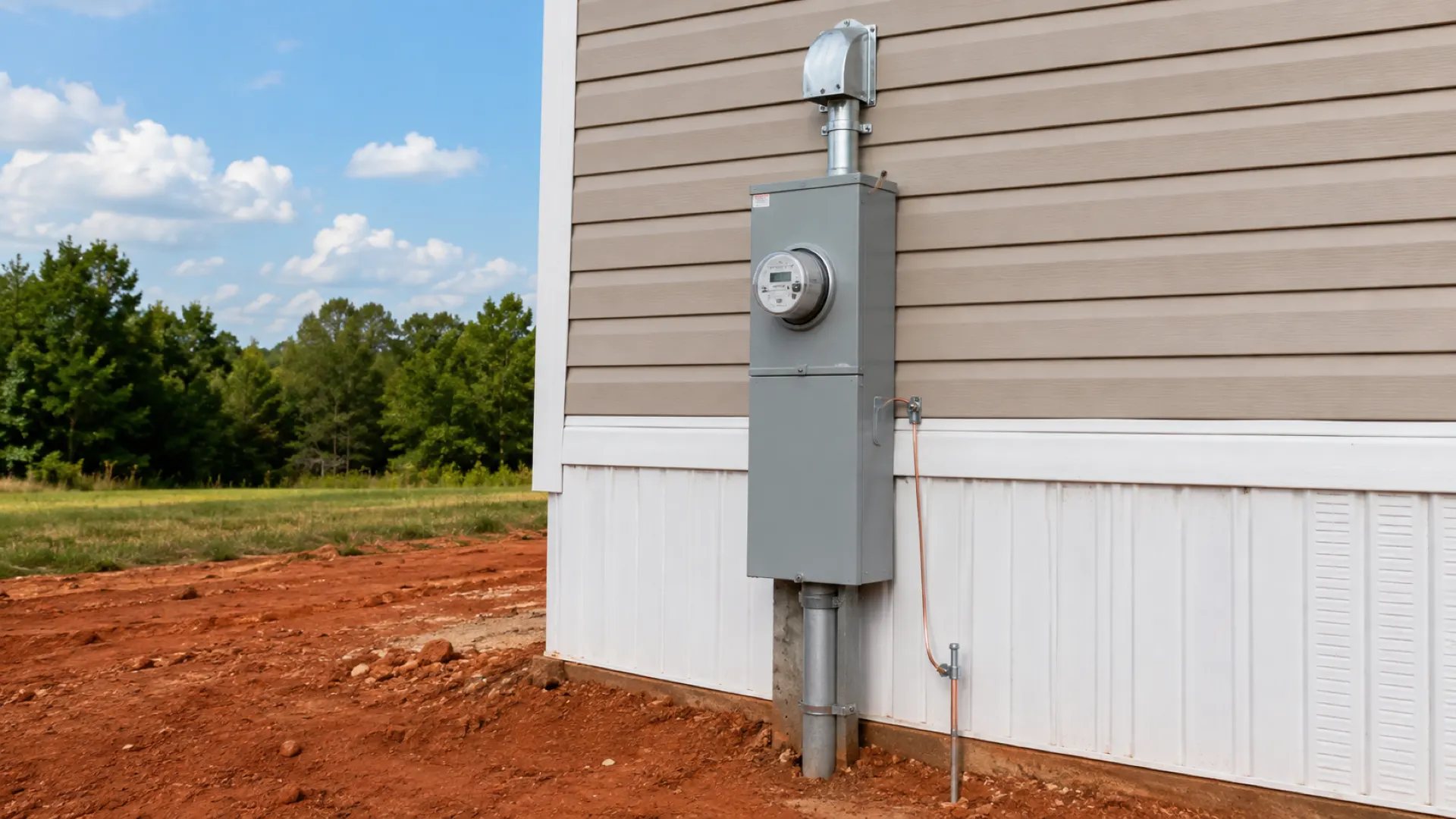
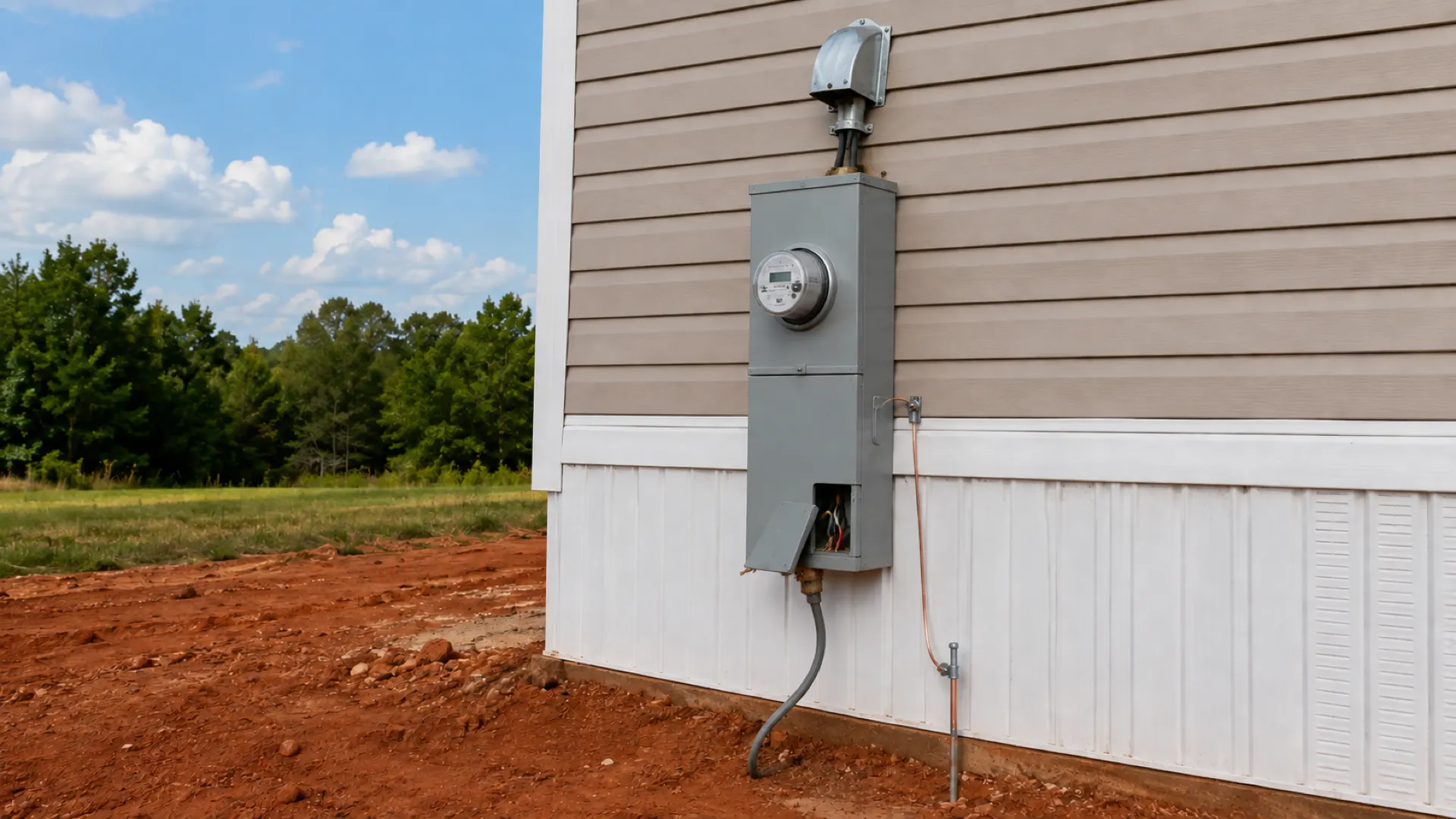
Two photographs, and the difference between them
The electrical service: what the inspector looks at
The meter base and disconnect are the power company's boundary with your home. The two below are the same equipment on the same wall.
The electrical work a manufactured home needs
Meter base and disconnect: next to the home, not on it
The electrical code's manufactured home article (Article 550) normally puts the service equipment — the meter base and main disconnect — beside the home rather than on it: on a pole or pedestal in sight of the home and no more than 30 feet from its outside wall. Mounting it on the home is allowed only under set conditions, such as a home on a permanent foundation. Settle which one applies before anyone sets a pole.
The feeder into the home's panel
From that disconnect, a feeder runs to the panel inside the home. Article 550 calls for four insulated conductors — two hot legs, a neutral and a separate equipment ground — sized for at least 100 amps. The neutral and ground stay separate at the home's panel, so a three-wire feeder left from an older setup does not meet it. The trench or overhead span from the pole to the home belongs in the same quote.
Inspection, then power release
The electrical permit comes from the county or town inspections office. After the electrical inspection passes, that office releases the service to the power company, and the utility connects only after the release. Some counties also hold the release until the setup and other trade inspections pass, so ask the inspections office which inspections come first. The inspection sequence guide lays out that order, and the cost to run power to a manufactured home covers the pole, trench and utility charges.
Have this ready for the electrician
- The home's panel rating from the data plate or panel label, and whether it is a single or double wide
- Where the utility's nearest pole or transformer is, and whether the service will run overhead or underground
- The name of the power company and any work order number it has given you
- The setup permit number, so the electrical permit sits under the same address and project
Source: NC Office of State Fire Marshal — Article 550, mobile and manufactured homes. The local inspections office and your electrician apply it to your site.
Related Project Stages
Where this provider type may fit
This category often fits during site utility planning, after the home is set, and before electrical approval or occupancy. Some temporary power, pedestal, trench, or service work may need to happen earlier.
Some projects may not need this provider type. Use the stage links below to understand the timing before assuming the work is needed, included, or ready to schedule.
What this provider type may help with
Mobile home service, feeder, disconnect, pedestal, grounding, connection, or circuit work when included.
Coordination with the serving utility, trench route, meter location, home installation instructions, and inspections.
Troubleshooting or correcting electrical items identified during setup or inspection.
Project stages this provider type usually relates to
These stage links are educational routing labels. They do not show provider results or assign a business to your project.
Homeowner Scope Check
When this may come up
The project needs a new service path or final connection between utility equipment and the home.
Dealer or installer scope excludes part of the electrical work.
An inspection, startup, or utility release identifies electrical corrections or documentation needs.
Questions to ask
- 1Which service, feeder, pedestal, trench, permit, connection, and interior tasks are included?
- 2Who coordinates the utility application, meter, transformer, inspections, and release sequence?
- 3What home specifications, load information, distances, equipment, and site conditions affect the quote?
- 4How will change orders be handled if utility requirements or field conditions differ?
Things to gather
- 1Home electrical specifications, installation manual, panel details, and dealer or installer scope.
- 2Utility provider, account or application status, service point, meter location, and required equipment.
- 3Site plan showing home, pedestal, trench, driveway, septic, well, and other utilities.
- 4Permit status, inspection notes, distance measurements, access constraints, and target energization date.
What may affect cost or timing
Compare the full mobile home project costCommon Questions
Electrical for a mobile home, answered.
What can an electrical provider for a mobile home help with?
Electrical providers may handle service equipment, feeders, connections, trench-related coordination, interior or exterior circuits, corrections, or inspection work within their license and contract. Utility-company work and electrician work are separate responsibilities that must be coordinated.
What affects the cost when I need an electrical provider for a mobile home?
Provider pricing and scheduling can depend on site conditions, documents, timing, access, materials, local requirements, and the exact work being requested. Ask for written scope before comparing numbers. Project stage, location, access, timing, materials, and provider scope. Whether the work is new, corrective, repair, finish, or post-install service work. Permit, inspection, utility, lender, insurance, warranty, or local requirements. How much coordination is needed with adjacent provider categories.
When in my project should I contact an electrical provider for a mobile home?
This category often fits during site utility planning, after the home is set, and before electrical approval or occupancy. Some temporary power, pedestal, trench, or service work may need to happen earlier.
Related homeowner checklists
Related homeowner paths
Related guides
Other provider types that may be involved
Helpful Next Step
Get help understanding what type of provider may fit.
For North Carolina Providers
Provide Electrical services in North Carolina?
We send these jobs to contractors in the homeowner's county. We hire subcontractors and pay them directly for the work.
Next Step
Keep this provider type in context.
Use the planner, dealer quote questions, or county/code library to understand when this scope may matter.
Land question first?
Can My Land Work?
Review zoning, septic or sewer, water, access, utilities, site prep, dealer quote, and setup questions before assuming the land works.
Preparing land for transport?
Site Preparation Checklist
Organize clearing, grading, driveway access, poured footers, the setup workspace, and dealer quote questions.
Transport coming into focus?
Before Transport Checklist
Sort access, site preparation, poured footers, setup, utility connections, who does each job, and local process questions.
Utility questions unclear?
Septic, Well, and Utilities
Organize septic or sewer, well or water, electric, plumbing, HVAC, propane/gas, dealer scope, and local process questions.
Setup or final questions?
Setup and Inspection Readiness
Organize setup contractor, foundation, utilities, decks, stairs, skirting, trim-out, inspection, and dealer-scope questions.
Checking NC guidance?
NC Installation Manual
Understand how the NC Installation Manual, NC OSFM, county/local AHJs, manufacturer instructions, and the professionals who do the work fit together.
Reviewing a quote?
Dealer Quote Questions
Separate what may be included, excluded, estimated, or assigned to another party before you sign.
Checking local requirements?
County / Code Library
Use source-backed starting points for county, local AHJ, utility, septic, well, and inspection questions.
No account needed
Get a free quote
Need help with the rest of the job, not just this trade? Tell me where your project is and I'll call you.
What My Manufactured Home Guide Does
My Manufactured Home Guide helps homeowners understand the manufactured-home project path, organize questions, and identify provider types that may be involved.