
Start with the homesite
If you already own land, check whether it can support the home. If you do not own land yet, do not assume every rural or unrestricted listing will work for a manufactured home.
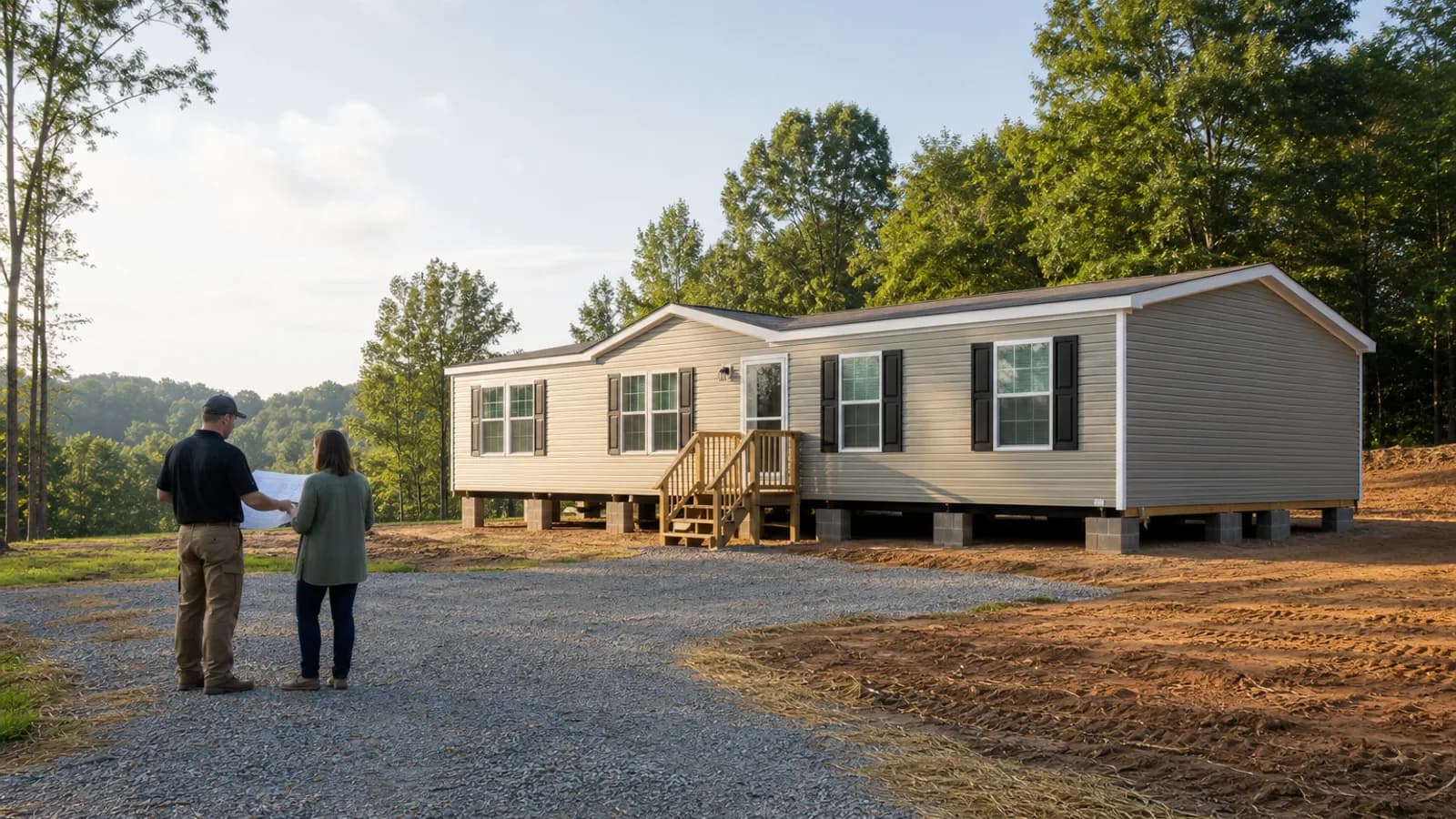
Before You Buy the Home
Before you sign for a mobile home — also called a manufactured home, the same home the county's paperwork names, and a trailer home to some people, which is not a travel trailer — make sure the project around the home is understood clearly enough to avoid expensive surprises.
Short answer: Before signing or paying a home deposit, line up the exact home specifications with the land path, written dealer scope, financing conditions, delivery access, utilities, setup, permits, inspections, and work assigned to other parties. A home price and a project-ready plan are not the same thing.
Reviewed by a manufactured home setup contractor and dealer.
Buying land for a mobile home? The Land Check reads the county's own permit rules for the one parcel you give us, and says where each answer came from and when.
$125. Asking takes no payment and places no order.
Start with the exact property, quote, record, or job detail behind your question. Mark what is confirmed, what still needs a current source, and who must answer it. Use the checklist to keep the next call, document, or decision clear.
The home price is only one part of the project.
Land readiness and permits can affect what home size, type, and timeline are realistic.
Quote exclusions matter because setup, utilities, access, steps, decks, skirting, and inspections may be handled separately.
Step 1
Confirm where the home will go and whether the land, county, zoning, septic, water, access, and power path are realistic.
Step 2
Ask what the dealer quote includes and excludes for delivery, setup, foundation, utility connections, permits, inspections, and finish items.
Step 3
Compare financing, site work, contractor categories, and timing before assuming the home can be delivered on the schedule you want.
Details to Sort
If you already own land, check whether it can support the home. If you do not own land yet, do not assume every rural or unrestricted listing will work for a manufactured home.
Ask whether the quote includes delivery, setup, foundation or blocking, tie-downs, permits, inspections, utility connections, steps, decks, skirting, trim-out, and site work. If it does not, plan those items separately.
Septic or sewer, well or public water, power distance, driveway access, grading, trees, slope, and delivery route can all affect cost and timeline before the home is usable.
Delivery can be delayed by land approvals, septic or well work, driveway work, power coordination, permits, inspections, lender requirements, or missing contractors.
Record a clear owner and current evidence for: parcel fit; home specifications; written dealer scope; total-project funding; and the delivery-to-occupancy sequence. A target date, verbal assurance, advertised package label, or neighboring project is not evidence that a gate is complete. Local authorities, utilities, lenders, insurers, qualified providers, and the signed documents control their respective decisions.
Related check
Use the current North Carolina licensing source and keep the result with the quote and other purchase records.
Secondary Support
Use the project router first, then share details for review if you still need help organizing the project context. This does not guarantee a provider match or availability.
Home dimensions, section count, driveway access, wastewater, water, utilities, setbacks, and site conditions may change whether the current plan works.
Next step: Pause the property-dependent commitment and organize the parcel questions through the Manufactured Home Land Check path and responsible local sources.
Terms such as delivered, set, installed, or turnkey do not identify every included task, allowance, exclusion, permit, inspection, or closeout record.
Next step: Ask for the current written scope and use Review My Quote to organize inclusions, exclusions, assumptions, and by-others work.
Financing terms do not establish the cost or funding path for land, site work, utilities, installation, inspections, exterior access, corrections, and contingency.
Next step: Build the total-project worksheet and ask the lender which documented categories its actual product can consider.
It is safer to understand the land path first. Land, permits, utilities, and delivery access can change the home size, setup scope, cost, and schedule.
Ask what is included, what is excluded, which party is responsible for permit steps and setup, what site work is required, what utilities must be ready, and what happens if the property is not ready for delivery.
We can help you organize the early questions around zoning, access, utilities, septic, well, grading, delivery, and setup so you know what to verify before spending more money.
No. Many people reach out before buying land so they can understand what to check before they commit to a parcel.
Many people use the terms interchangeably. Manufactured home is the modern professional term, but mobile home is still common in search, county records, and everyday conversations.
Each link was checked on the date shown. The office that issued it decides your parcel, not this page.
Federal source · checked 2026-08-31
Official homeowner starting point for purchasing, home identification, installation, site preparation, manuals, warranties, and consumer questions.
North Carolina state source · checked 2026-08-31
Official North Carolina starting point for manufactured-home installation, licensing, consumer, and program information; local project requirements still need confirmation.