
Zoning and local permission
Ask whether manufactured homes, mobile homes, single-wides, double-wides, replacement homes, or moved homes are allowed on the parcel. City limits, zoning districts, overlays, and subdivision rules can matter.
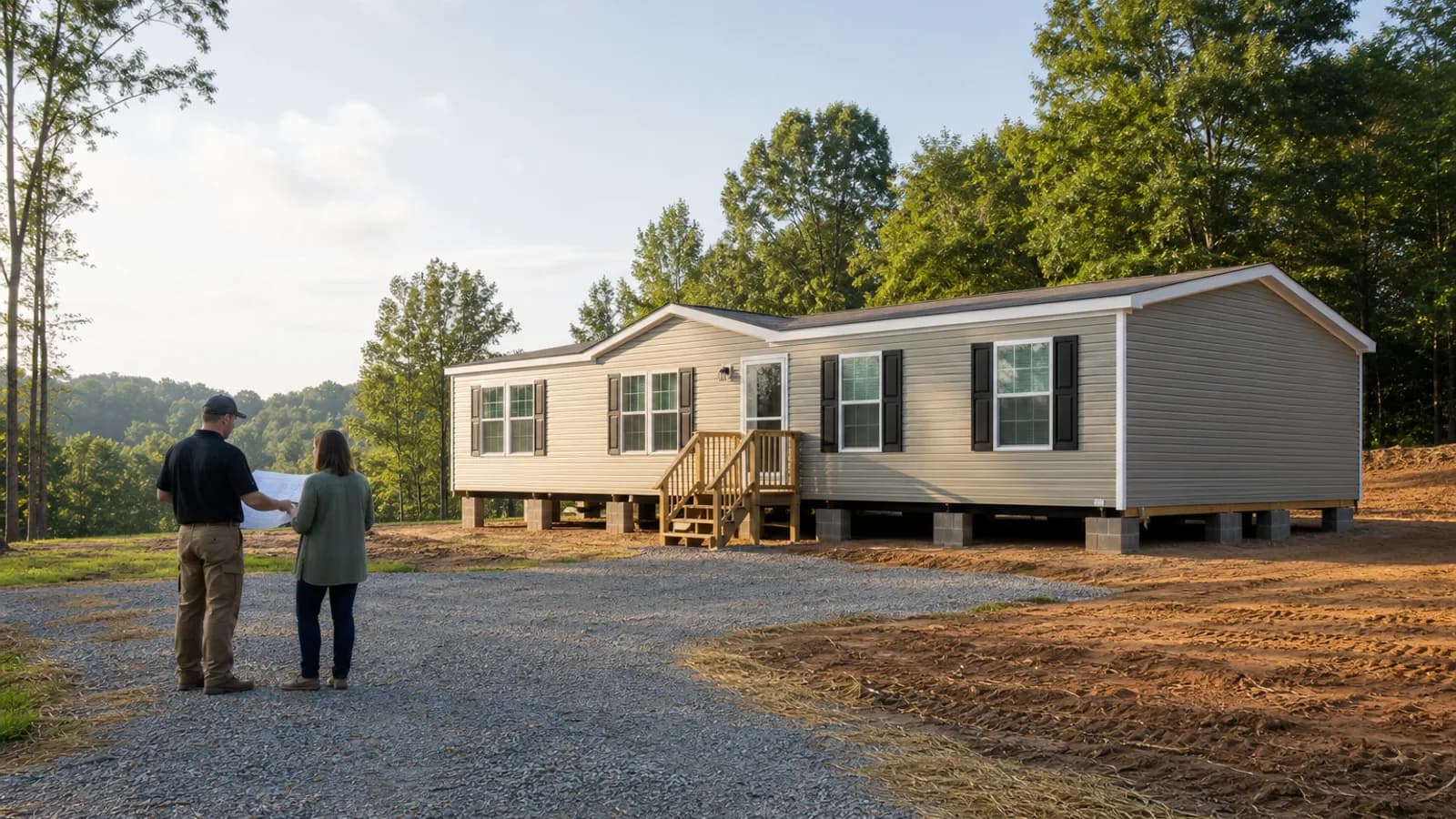
Before Buying Land
Treat the parcel as eight connected decisions, not a listing that is simply buildable or unrestricted. Start early enough to identify unknowns before the contract decision date.
Short answer: Before buying land for a manufactured home in North Carolina, verify eight separate facts for the exact parcel: the governing jurisdiction and allowed home type; septic or sewer; well or public water; legal and physical access; power and other utilities; setbacks, slope, drainage, flood exposure, and usable placement area; recorded restrictions and easements; and delivery, site-preparation, financing, and contract timing. A listing description, nearby home, prior use, or one favorable office answer is not full approval. Record the responsible source and date for each answer before the decision deadline. My Manufactured Home Guide organizes the research and open questions; it does not determine zoning, suitability, title, permits, financing, or approval.
Reviewed by a manufactured home setup contractor and dealer.
Buying land for a mobile home? The Land Check reads the county's own permit rules for the one parcel you give us, and says where each answer came from and when.
$125. Asking takes no payment and places no order.
Start with the exact property, quote, record, or job detail behind your question. Mark what is confirmed, what still needs a current source, and who must answer it. Use the checklist to keep the next call, document, or decision clear.
A listing that looks buildable may still have zoning, septic, access, utility, slope, floodplain, or restriction problems.
Unrestricted land still may need county approvals, environmental health review, driveway access, utilities, and permits.
Checking land first helps you avoid buying a parcel that cannot support the home you want.
Step 1
Gather the parcel number, listing, county, city-limit status, road frontage, utility notes, and any restriction documents.
Step 2
Check zoning, septic or sewer, water, driveway access, power distance, slope, floodplain, setbacks, and delivery route.
Step 3
Compare the land findings with the home size, financing path, setup plan, and contractor work likely needed before closing.
Details to Sort
Ask whether manufactured homes, mobile homes, single-wides, double-wides, replacement homes, or moved homes are allowed on the parcel. City limits, zoning districts, overlays, and subdivision rules can matter.
A parcel may need a soil evaluation, septic permit path, public sewer confirmation, well location, public water availability, or proof that existing utilities can legally serve the home.
Road frontage, driveway permits, culverts, private roads, slope, trees, soft ground, bridges, turning radius, and overhead lines can affect whether the home can be delivered and set.
Review deed restrictions, HOA rules, subdivision documents, land title, lender requirements, and whether the land and home will be financed together or separately.
Create one row for jurisdiction and zoning; wastewater; water; legal and physical access; utilities; usable placement and site conditions; restrictions and easements; and delivery, site-work, financing, and timing. For each row, record the source, date, exact answer, supporting document, limitation, next question, responsible person or office, and decision deadline. Mark an unanswered lane as unresolved rather than assuming another approval covers it. A Manufactured Home Land Check can organize available public evidence and open questions, but the responsible authority, utility, title or survey source, lender, and retained professional keep their project-specific decisions.
Manufactured Home Land Check
Use a Manufactured Home Land Check to organize available property records, warning signs, unknowns, and next questions before the next commitment. It does not determine zoning, septic, access, utility, engineering, title, financing, permit, or property approval.
Secondary Support
Use the project router first, then share details for review if you still need help organizing the project context. This does not guarantee a provider match or availability.
Those words do not establish the responsible jurisdiction, allowed home type, wastewater path, access, utilities, recorded restrictions, usable placement area, or delivery fit.
Next step: Verify each lane with the responsible public office, utility, title or survey source, and qualified project professional instead of relying on the listing label.
An existing feature does not prove current records, condition, capacity, legal service, location, setbacks, reconnection requirements, or approval for the proposed home.
Next step: Gather the available record and ask the responsible office or utility what must be confirmed for this parcel, home, and intended use.
Everyday access does not prove legal access, entrance approval, private-road rights, bridge capacity, delivery turns, overhead clearance, staging space, or the final site approach.
Next step: Separate legal and entrance questions from a transporter's route review, then document any clearing, temporary access, or driveway work that remains.
Planning, environmental-health, utility, title, survey, road, transporter, provider, and lender answers can arrive on different schedules. An unresolved item can remain important even when another check is favorable.
Next step: Put every open question beside the actual contract date and ask an appropriate real-estate or legal professional how the agreement handles unresolved due diligence.
Start with whether the property legally allows the manufactured home and whether septic or sewer, water, access, and utilities can realistically work.
No. Unrestricted language does not replace county rules, septic suitability, setbacks, access, floodplain, utility, permit, or delivery checks.
We can help you organize the early questions around zoning, access, utilities, septic, well, grading, delivery, and setup so you know what to verify before spending more money.
No. Many people reach out before buying land so they can understand what to check before they commit to a parcel.
Many people use the terms interchangeably. Manufactured home is the modern professional term, but mobile home is still common in search, county records, and everyday conversations.
Each link was checked on the date shown. The office that issued it decides your parcel, not this page.
North Carolina state source · checked 2026-08-31
Official state program boundary for onsite wastewater, private wells, and the local environmental-health framework. Parcel-specific findings and permits remain with the responsible local program and qualified professionals.